How Three Siblings Divided the Cosmos—And Why Their Balance Still Matters Today
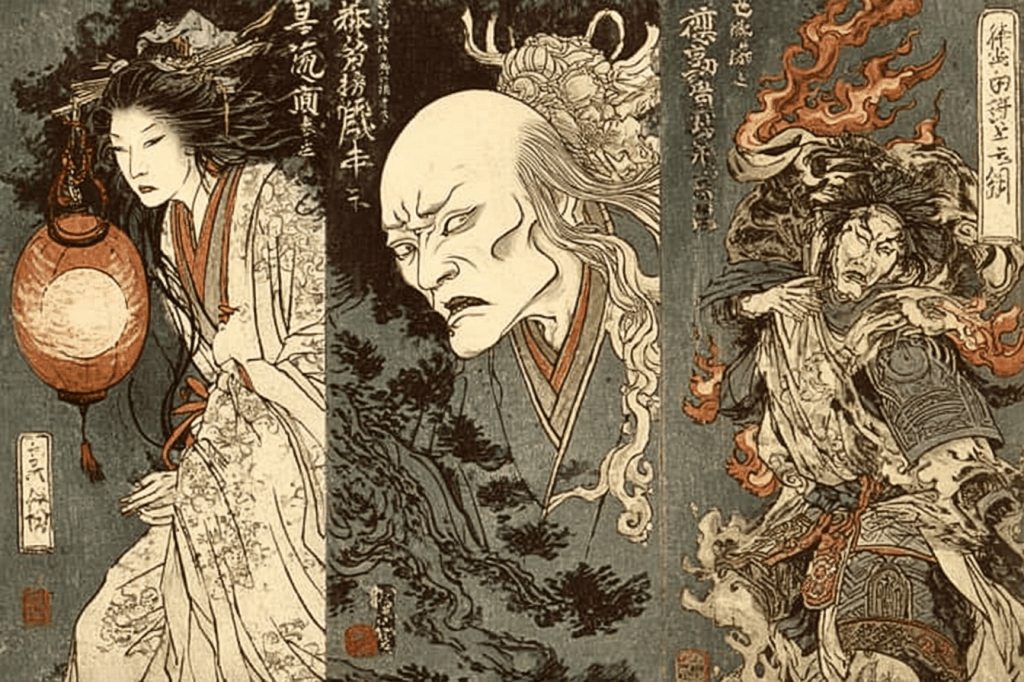
The Birth of Divinity: Izanagi’s Purification and the Creation of the Kami
In the beginning, there was chaos. Then, from the sacred waters of purification, emerged the most powerful divine siblings in Japanese mythology. The story of the Three Noble Children—Amaterasu, Tsukuyomi, and Susanoo—isn’t just another creation myth. It’s the foundational narrative that explains the Japanese cosmos, the imperial lineage, and the very nature of balance in the universe.
According to the Kojiki (Records of Ancient Matters, 712 CE) and the Nihon Shoki (Chronicles of Japan, 720 CE), these three deities were born from a single, profound moment of divine purification. When the creator god Izanagi returned from the land of the dead (Yomi) after a failed attempt to retrieve his wife, Izanami, he performed a ritual purification in the Awagihara river. This was no ordinary bath—it was a cosmic reset that would create the fundamental forces governing the Japanese world.
From Izanagi’s left eye emerged Amaterasu, the sun goddess who would become the celestial sovereign of the heavens and the mythical ancestor of Japan’s imperial line. From his right eye came Tsukuyomi, the moon god who would rule the night. And from Izanagi’s nose burst forth Susanoo, the storm god whose tempestuous nature would define the sea and all that churns beneath the waves.
This wasn’t just the birth of three powerful kami (gods). This was the moment the Japanese cosmos found its rulers—and its fundamental tension.
The Sun’s Radiance: Amaterasu, the Imperial Ancestor
Amaterasu, whose name literally means “shining in heaven,” is more than just a sun goddess. In the Kojiki, she is described as the ruler of the High Celestial Plain (Takamagahara), and her radiance isn’t just light—it’s the divine right to rule.
“From her left eye, the sun was born, and from her right, the moon; but the resplendent one was the left, which is the sun, and her name is called the Great Goddess of the Sun in Heaven.” — Kojiki, I
Her shrines, particularly the Grand Shrine of Ise, are the most sacred in Shinto. Her greatest myth—hiding in a cave, plunging the world into darkness until lured out by the other gods—isn’t just a story about a solar eclipse. It’s the ultimate story of balance: the world cannot thrive without the sun’s return.
The Moon’s Mystery: Tsukuyomi, the Enigmatic Shadow
While Amaterasu rules the day, her brother Tsukuyomi governs the night. Born from Izanagi’s right eye, he is perhaps the most enigmatic of the trio. In the Nihon Shoki, Tsukuyomi is sent to represent Amaterasu in a feast with the food goddess, Ukemochi. When Ukemochi produces food from her orifices in a display of creation, Tsukuyomi is so disgusted that he kills her, creating food and crops from her body.
This violent act explains the separation between day and night—why the sun and moon are rarely seen together. Tsukuyomi’s story is less about malevolence and more about the necessary separation of realms: the moon’s cool, reflective light as a counterpart to the sun’s fiery brilliance.
The Storm and the Sea: Susanoo’s Chaotic Might
Born from Izanagi’s nose, Susanoo inherited the tempest. His domain is the sea and storms, and his story is one of transformation—from a destructive, chaotic force to a culture hero. After being banished from heaven for his wild behavior, Susanoo descended to the earthly realm of Izumo, where he slew the eight-headed serpent Yamata no Orochi and discovered the sacred sword Kusanagi-no-Tsurugi (one of the Imperial Regalia), thereby redeeming his chaotic nature.
His story, as detailed in the Kojiki, is among the most detailed in Japanese mythology, showing that even the most tempestuous forces can be channeled toward protection and creation.
The Cosmic Balance: More Than Sibling Rivalry
The Three Noble Children represent more than just celestial bodies and natural forces. They embody the Shinto concept of musubi (creative harmonizing power) and the universe’s essential balance.
– Amaterasu represents order, clarity, and the visible world.
– Tsukuyomi represents the cyclical, reflective, and hidden aspects of existence.
– Susanoo represents the necessary chaos that precedes creation and the untamed forces of nature.
Their dynamic is not merely one of sibling rivalry, but of cosmic interdependence. The sun cannot shine without the moon’s reflective glow; the calm cannot be appreciated without the storm. This balance is fundamental to the Japanese aesthetic of wabi-sabi (the beauty of imperfection and transience) and the national concept of wa (harmony).
The Imperial Connection: From Myth to Monarchy
The Three Noble Children are not just cosmic principles; they are the divine justification for Japan’s imperial lineage. According to the Nihon Shoki, Amaterasu sent her grandson, Ninigi-no-Mikoto, to rule the earthly realm with the sacred mirror, jewel, and sword—the three Imperial Regalia. Every Japanese emperor, including the current Emperor Naruhito, is considered a direct descendant of Amaterasu, creating an unbroken line from the sun goddess to the modern Chrysanthemum Throne.
This divine lineage, known as the “unbroken imperial line,” has been a cornerstone of Japanese cultural and political identity for centuries, making the myth of the Three Noble Children not just a religious story but a political and cultural cornerstone.
The Enduring Legacy
The Three Noble Children are more than mythic figures; they are active symbols in modern Japan. Amaterasu’s Ise Shrine is rebuilt every 20 years in a ritual that celebrates renewal. Tsukuyomi’s quiet influence is felt in the moon-viewing festivals (Tsukimi). Susanoo’s shrines, particularly the Yasaka Shrine in Kyoto, are central to the famous Gion Matsuri, where his protective powers against disease are invoked.
Their story is retold in manga, anime, and video games, from Naruto to Okami. They appear in the popular Shin Megami Tensei video game series as powerful beings to summon. These modern retellings keep the myths alive for new generations.
Conclusion: The Three Who Hold the Universe
The Three Noble Children are not just characters in a forgotten pantheon. They are the fundamental forces that, according to Japanese tradition, keep the world in balance. They teach that order needs chaos, light needs darkness, and the sun must eventually give way to the moon. In a world often divided by binaries—good and evil, day and night, order and chaos—the story of Amaterasu, Tsukuyomi, and Susanoo reminds us that these are not opposites, but siblings, born from the same source, each essential to the harmony of the whole.
Their legacy is the very essence of Japan: a land where the sun rises, the tides ebb and flow, and the moon watches over all in a delicate, divine balance.
1. Philippi, D. L. (1968). Kojiki. University of Tokyo Press.
2. Aston, W. G. (1896). Nihongi: Chronicles of Japan from the Earliest Times to A.D. 697. Kegan Paul.
3. Bocking, B. (1997). A Popular Dictionary of Shinto. Routledge.
Enjoyed this journey through Japanese mythology? Share your thoughts on which of the Three Noble Children resonates with you most—Amaterasu’s radiance, Tsukuyomi’s mystery, or Susanoo’s tempestuous power. The conversation continues in the comments.
 Wicked Dual Blog