Review: “The Witch of Colchis” by Rosie Hewlett
“The world tried to make me the victim, so I became its villain.”
Rosie Hewlett, Medea
We know the story. We think we know the monster. Medea: the child-murderess, the barbarian witch, the spurned wife who butchered her own brother and fled in a dragon-drawn chariot. But what if the monster was, first, a woman? Rosie Hewlett’s The Witch of Colchis asks us to forget the ending we know and walk the first steps with Medea, not as a monster, but as a woman with a sorceress’s power and a young girl’s heart, in a world that fears both.
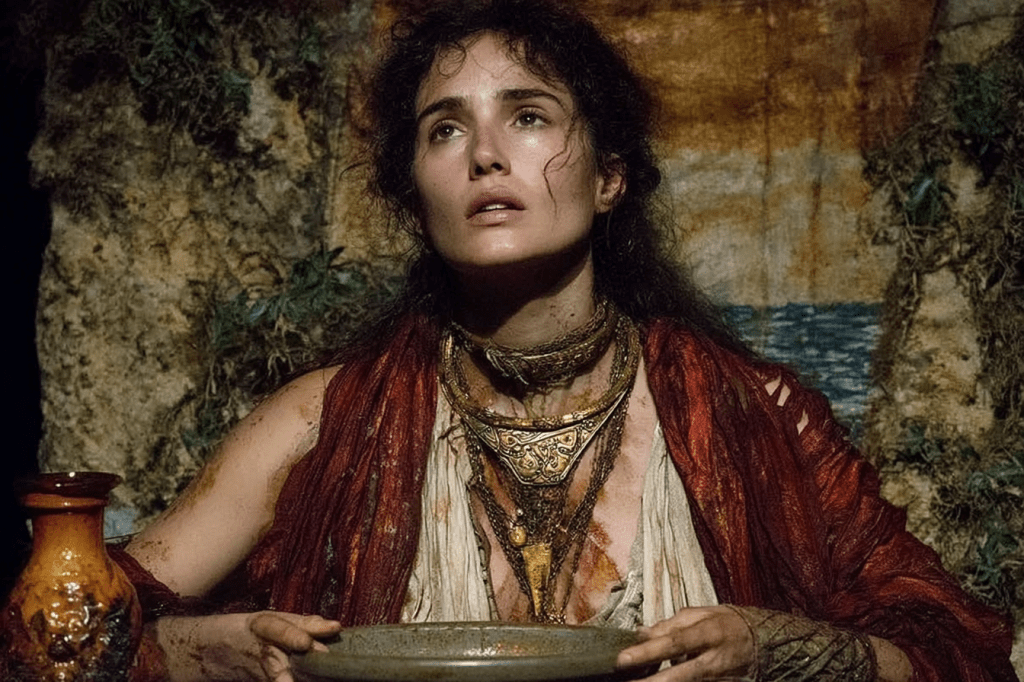
Hewlett’s novel is a masterclass in perspective. We meet Medea not in the gilded halls of myth, but in the shadowed, incense-thick temples of Colchis. Hewlett anchors her in the real, earthy world of Ancient Greek religion and cultic practice. This is not the clean, white-marble Greece of popular imagination, but a world of chthonic rites, chthonic gods, and the ever-present, capricious will of the Olympians. Medea is not just a princess; she is a priestess of Hecate, her “witchcraft” a deep, sacred, and dangerous knowledge passed through the women of her line. Her power is not a plot device, but a birthright, a lineage of power that sets her apart and makes her a target.
The narrative breathes life into the pantheon. The gods here are not distant, marble statues, but palpable, demanding forces. Hewlett excels in portraying the suffocating, all-encompassing reality of ancient belief. The gods are not myths to these characters; they are the weather of their world, as real and unpredictable as the Black Sea wind. Medea’s devotion to Hecate is a central pillar of her identity, grounding the “witchcraft” of the myth in a tangible, ritualistic practice that feels authentic to the world of ancient cults and mystery cults.
The novel’s great strength is its humanization of the archetypes. Medea is the protagonist, a “princess of nowhere,” caught between her divine heritage and her mortal heart. Hewlett paints her not as a sorceress from the start, but as a young woman with a terrifying gift she can barely control, a “unique and dangerous talent” that isolates her. Her “magic” is a burden. Her power is both her identity and her curse, a source of awe and terror for her people. She is not a plot device to enable Jason’s quest; she is the axis upon which the entire myth turns.
Jason is brilliantly reframed. He is not the golden, infallible hero of the Argonauts. He is a man of his time: ambitious, politically astute, and ultimately, hollow. Hewlett gives him a charming, pragmatic charisma that makes his eventual, inevitable betrayal not a simple act of villainy, but a slow, chilling erosion of loyalty. He is the “hero” of the Argonautica, but here, through Medea’s eyes, we see the tarnish on his gilded reputation. He is the antagonist not of malice, but of mediocrity and male pride.
The supporting cast is a tapestry of myth made flesh. The monstrous, dragon-toothed warriors are not faceless hordes but men, briefly, tragically given life only for slaughter. The Argonauts are a band of flawed, bickering heroes, their camaraderie laced with rivalry. Most importantly, Hewlett gives voice to the myth’s voiceless. We see the women of the Argo, the servants in Medea’s father’s palace, the forgotten people upon whose backs the “heroic” quest is built.
This is where the novel soars—and where, for this reader, it also slightly stumbles. The first half is a masterclass in building dread. The Colchis sequences, steeped in the claustrophobic, magically-charged atmosphere of Aeëtes’s court, are superb. The slow, chilling seduction of Medea by Jason’s promises of a different life is exquisitely paced. Hewlett makes you feel Medea’s isolation and her desperate, all-consuming hope for escape.
However, the story’s momentum can falter. After the breathless, high-stakes tension of the fleece’s theft and the flight from Colchis (the scene with the dismembered brother, Apsyrtus, is particularly visceral and haunting), the middle section on Iolcus and Corinth can feel like a necessary, but slower, bridge to the bloody climax. Hewlett’s focus is on the human drama, the slow poison of a marriage turning to resentment in a foreign court. This is the “human aspect” I found so compelling—the quiet, domestic horror of a brilliant woman trapped in a gilded cage, her power and intellect withering in the shadow of a lesser man.
This is also where the four-star rating takes shape. The novel is a powerful, deeply human character study, but at times it feels like we are getting the “Jason” half of the Medea-Jason saga. The epic scale of the Argonautica—the clashing rocks, the Sirens, the bronze giant Talos—is present but often feels secondary to the internal, psychological drama. For a story about the woman who helped cheat death, tame fire-breathing bulls, and command the very earth to save the Argonauts, the narrative’s focus on her emotional interior can, at times, feel at odds with the mythic, high-stakes magic of her legend. I found myself, at times, wishing for a deeper dive into the mechanics of her power and its roots in the chthonic, pre-Olympian cults of Hecate—a more visceral exploration of her “witchcraft” as a tangible, world-bending force, not just a metaphor for her otherness.
This is where the comparison to novels like The Silence of the Girls or Circe is most felt. Where Miller’s Circe luxuriates in the slow, divine perspective and Barker’s novel is steeped in the visceral, grimy reality of war, Hewlett’s The Witch of Colchis finds its power in the quiet moments of a woman being systematically broken. We feel the pain of her impossible choices because Hewlett has made us understand the world that forced her hand. When the final, terrible act of infanticide arrives, it is not a sudden act of madness but the horrific, logical, and devastating culmination of every betrayal, every lost hope, and every promise broken. It is a tragedy of agency reclaimed in the most horrific way imaginable.
In conclusion, The Witch of Colchis is a powerful, necessary, and deeply feminist reclamation. It does for Medea what so many modern retellings aspire to: it gives a voice to the vilified woman of myth and forces us to see the human in the monster and the monstrous in the hero. While its pacing can mirror the deliberate, heavy tread of a tragedy marching toward its foregone conclusion, and I occasionally wished for a deeper exploration of the magical and cultic systems, its true magic lies in its humanity. It is a poignant, often brutal, and ultimately shattering portrait of a brilliant woman who was, first and always, a woman. It earns its four stars as a vital, resonant, and emotionally devastating entry into the canon of mythic retellings.

Hewlett, R. (2023). The Witch of Colchis. London: Del Rey.
 Wicked Dual Blog