Dark Academia
-

Mabon, the modern neopagan festival of the autumn equinox and the second harvest, was named only in the 1970s — yet it gathers genuinely ancient materials: the equinox of the astronomers, the harvest rites of the folk, the Welsh youth Mabon ap Modron, and the descent myth of Demeter and Persephone.
-
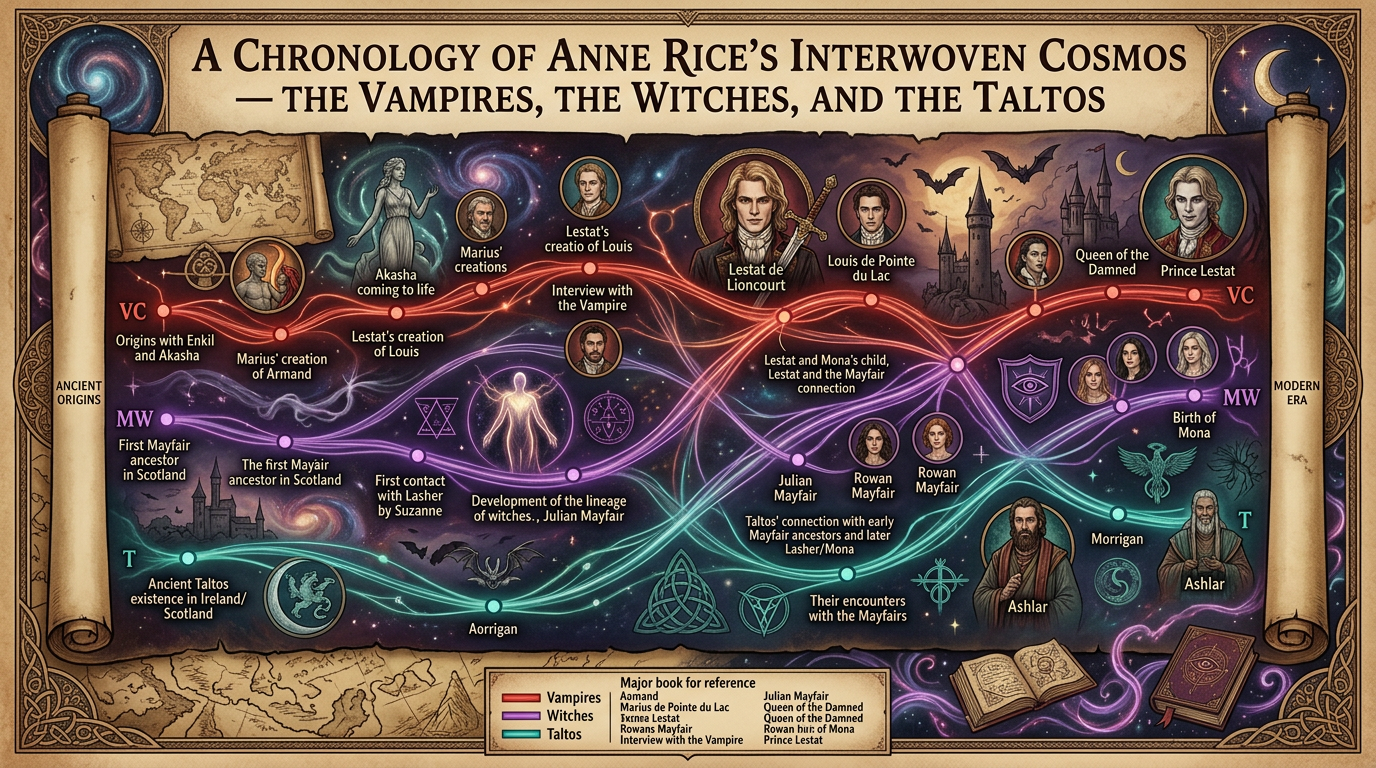
A companion register ordering Anne Rice’s interwoven cosmos two ways: by internal chronology, from ancient Egypt to the millennial confluence of the vampires, witches, and Taltos; and by the order of publication, 1976 to 2018. The Talamasca threads throughout, and three crossover novels mark where the twin sagas formally converge.
-
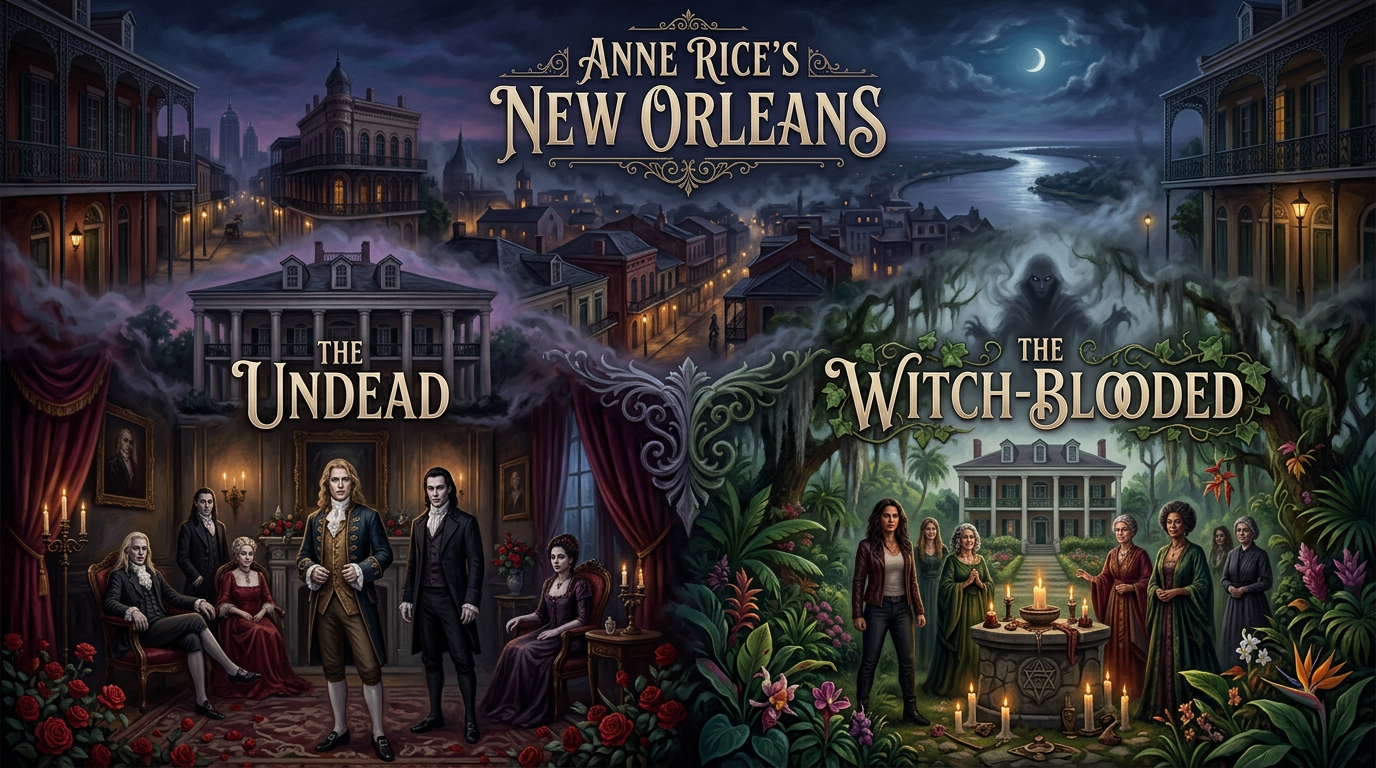
Anne Rice’s vampire and Mayfair witch sagas are twin dynasties drawn from one soil: Catholic, decaying New Orleans. Both are genealogies of cursed blood — the made undead, the born witch-blooded — joined by a shared city, a watching scholarly order, and a lifelong meditation on grief, inheritance, and the Southern past.
-
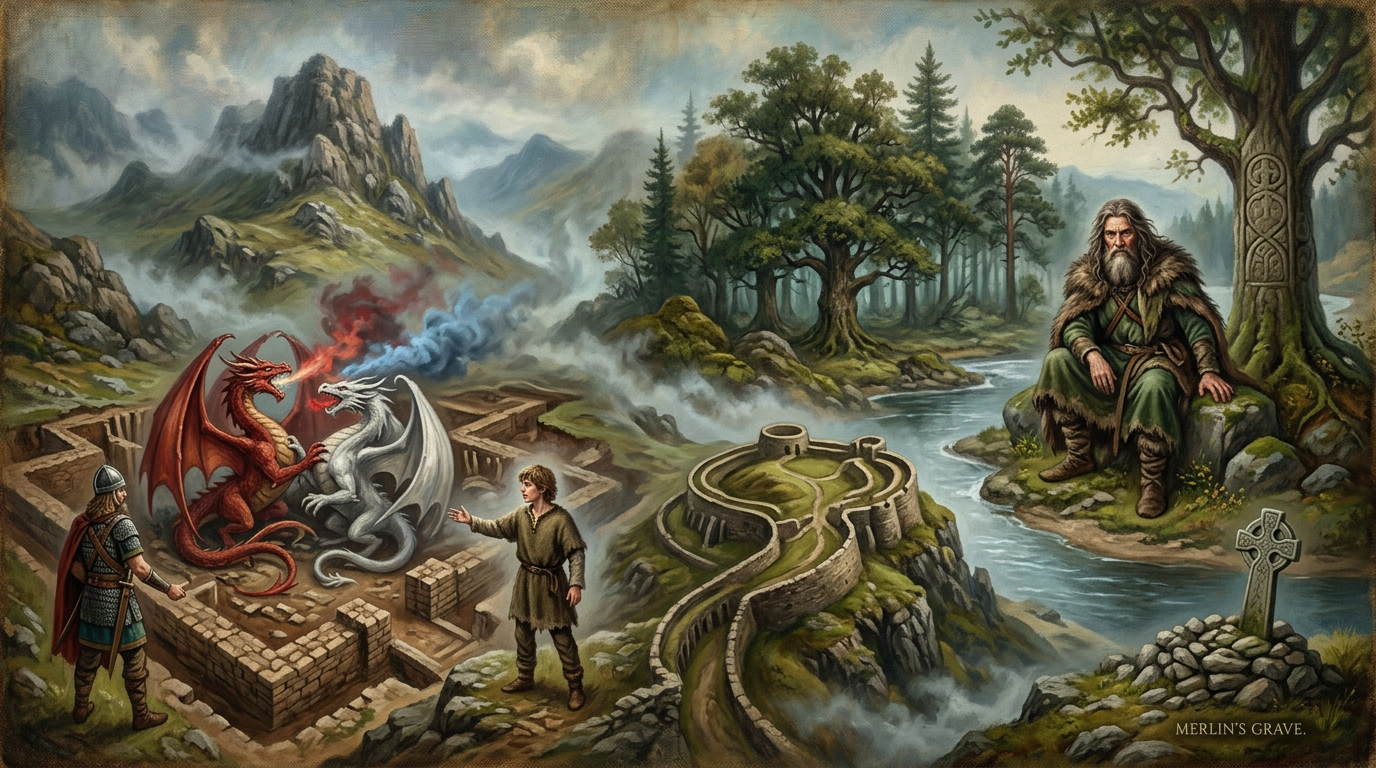
An archival study tracing the figure of Merlin from the sixth-century wild-man seers of the Welsh and Scottish North through Geoffrey of Monmouth’s twelfth-century literary construction to the enchanter of romance, examining the historical, folkloric, and anthropological layers that constitute one of Britain’s most enduring legendary figures.
-

A scholarly chronicle of the will-o’-the-wisp, tracing the marsh-light across European fens, the American South, and Asia. Examines its natural chemistry, its funereal folklore, its role as omen and lure, and its near-extinction with the draining of the wetlands that once gave it life.
-
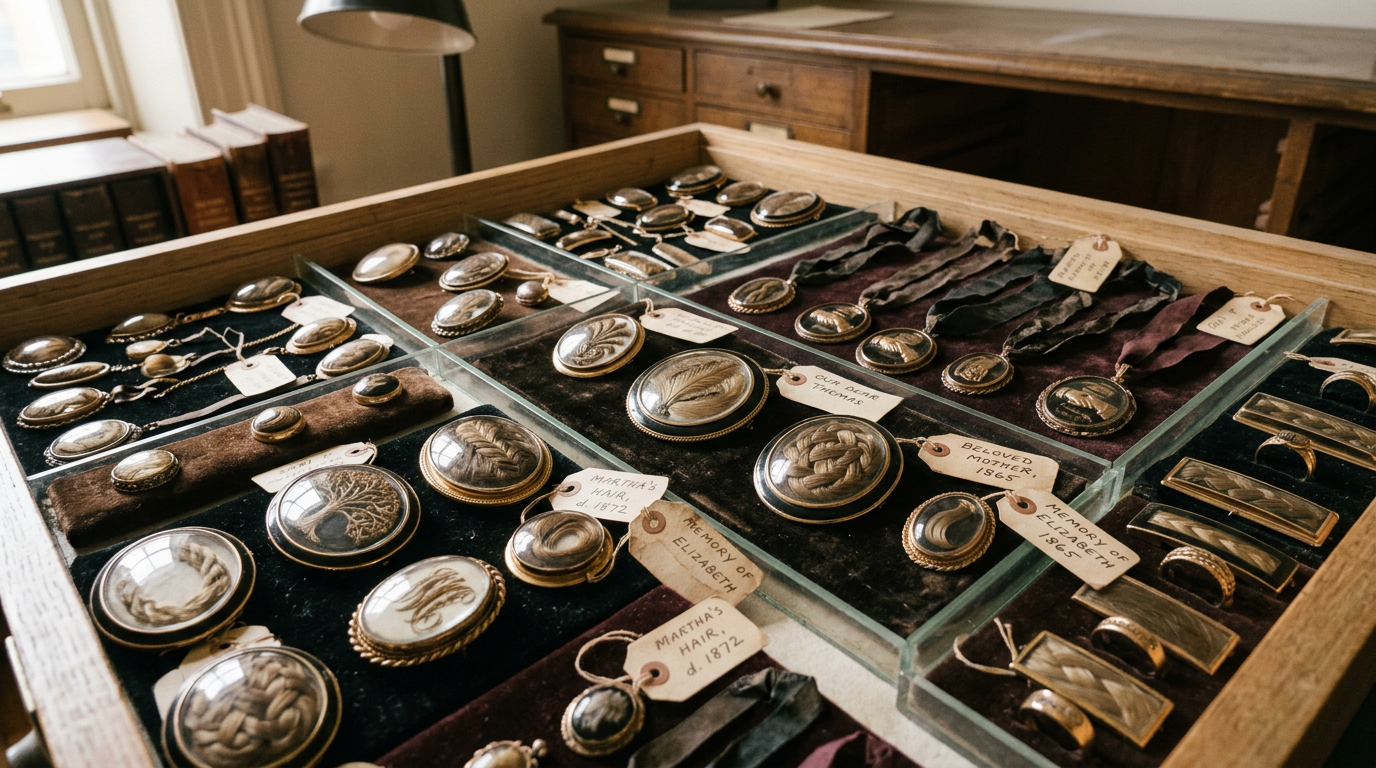
A field study of Victorian hairwork jewelry as material grief: the braiding of human hair into brooches, rings, and watch chains to preserve an incorruptible tether to the dead. This archival piece traces its craft, class economics, folklore, and the slow decay that now imperils the tokens themselves.
-
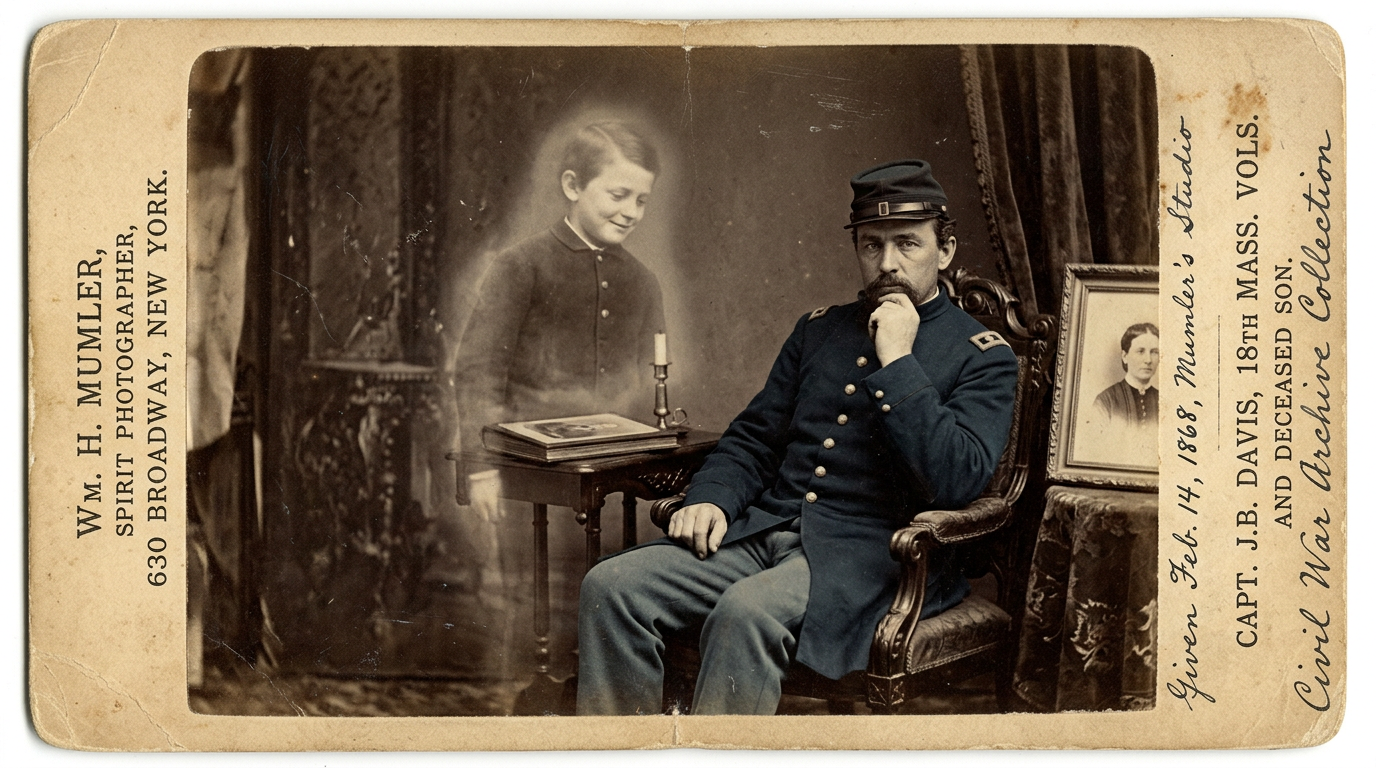
A field study of William H. Mumler, whose accidental self-portrait birthed spirit photography. Set against a nation drowning in Civil War dead, this archival piece chronicles his rise, his celebrated forgeries of the Lincolns, his trial for fraud, and the enduring hunger that made a chemical accident feel like resurrection.
-

A field study of Boudica, Iceni queen who set Roman Britain aflame in AD 60/61. This archival piece traces her contested name, the material vestiges of her rebellion, the lore woven around her, the rites of her cause, scholarly readings of the sources, and her long afterlife as a national ghost.
-
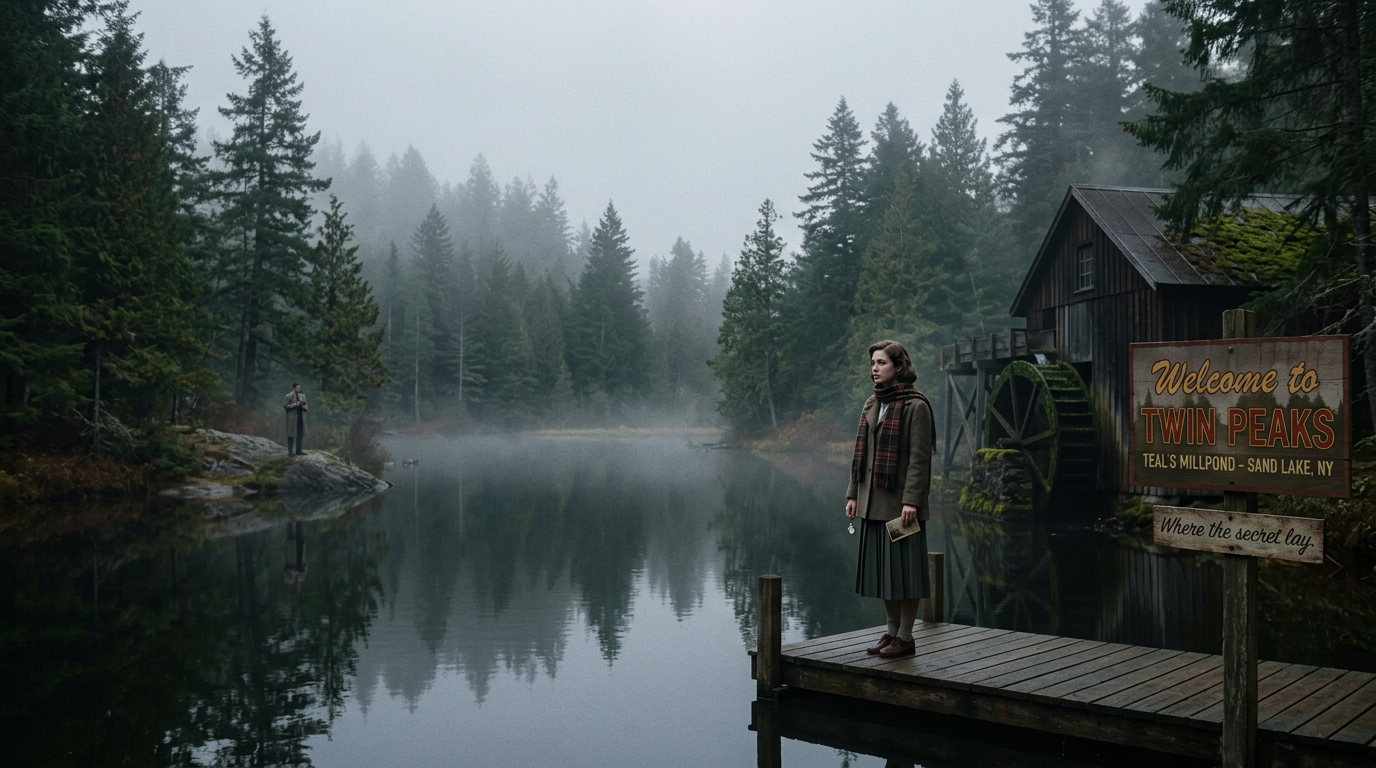
The 1908 drowning of Hazel Drew in a remote New York millpond—an unsolved murder that gripped the nation, then faded—examined as artifact of class, gender, and regional folklore, and traced to its strange rebirth as the inspiration for Twin Peaks’ Laura Palmer.
-

An archival field study into Haint Blue—the pale blue-green pigment born of Gullah tradition and crushed indigo. From the slave quarters of Savannah to the porches of the modern South, this chronicle traces a color engineered to deceive the restless dead and the predatory Boo Hag.