Home
-
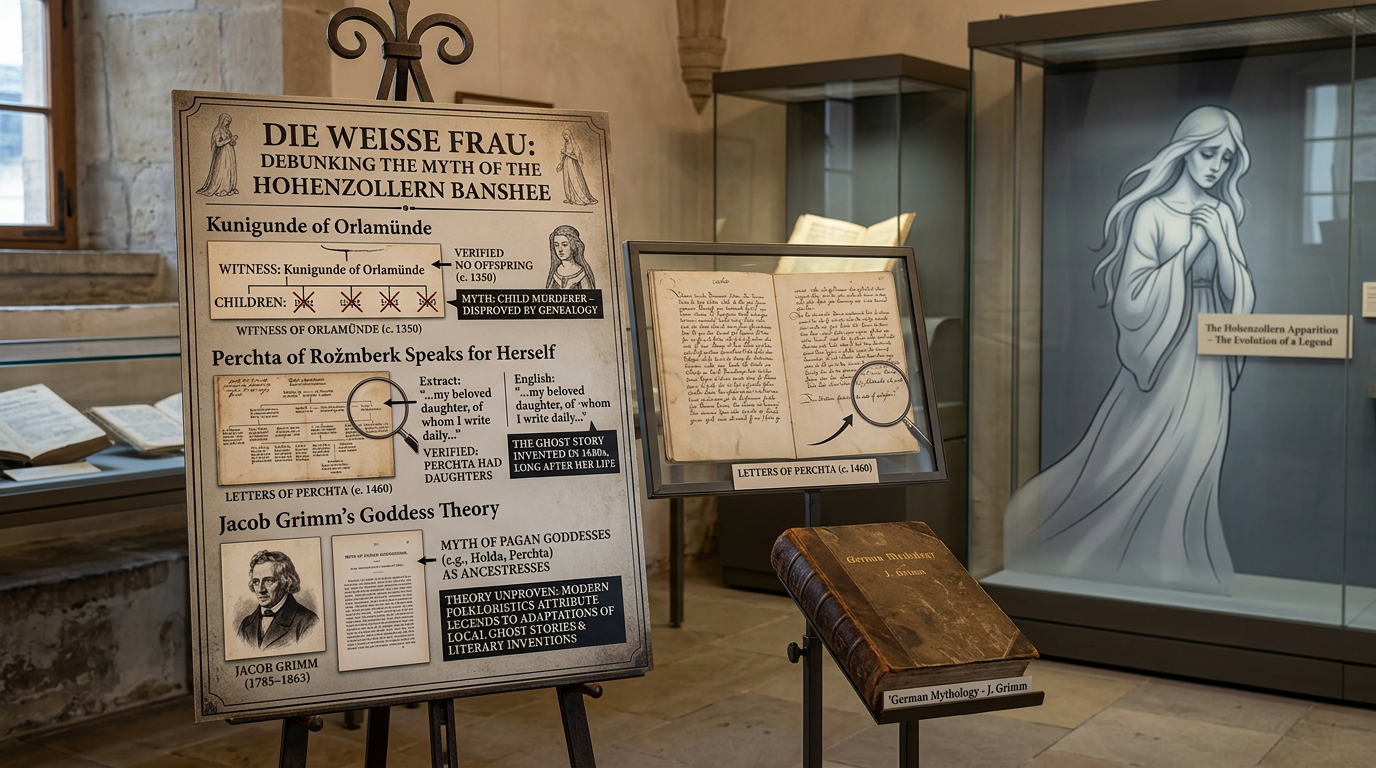
Companion to Journal Entry VI, this field study examines the White Lady said to foretell Hohenzollern deaths, showing that Kunigunde of Orlamünde apparently had no children to murder, that Perchta of Rožmberk speaks for herself in surviving letters, and that Jacob Grimm’s goddess theory for Germany’s pale women remains unproven.
-
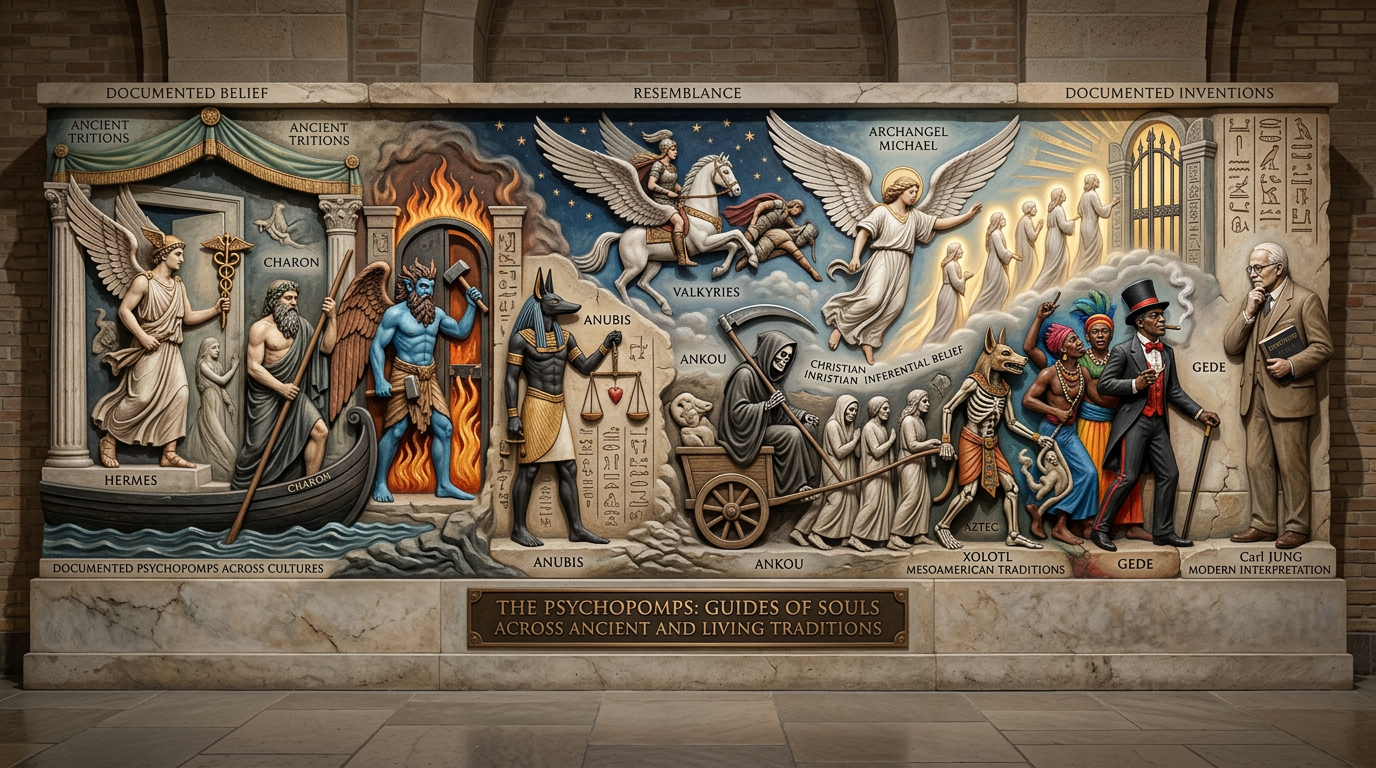
Companion to Journal Entry V, this field study follows the psychopomps, the guides of souls, from Hermes, Charon, and the Etruscan Charun through Anubis, the valkyries, Michael, and the Breton Ankou to Xolotl, the Gede, and Jung, separating documented belief from resemblance and modern invention across ancient and living traditions.
-

In Entry VIII, the Archivist examines the Trier witch trials of 1581–1593 and the prominent people they consumed, above all the judge and rector Dietrich Flade, alongside the persecutor Peter Binsfeld and the dissenter Cornelius Loos, while setting the register beside Faulkenmire’s unresolved 1892 New England clippings without claiming connection.
-
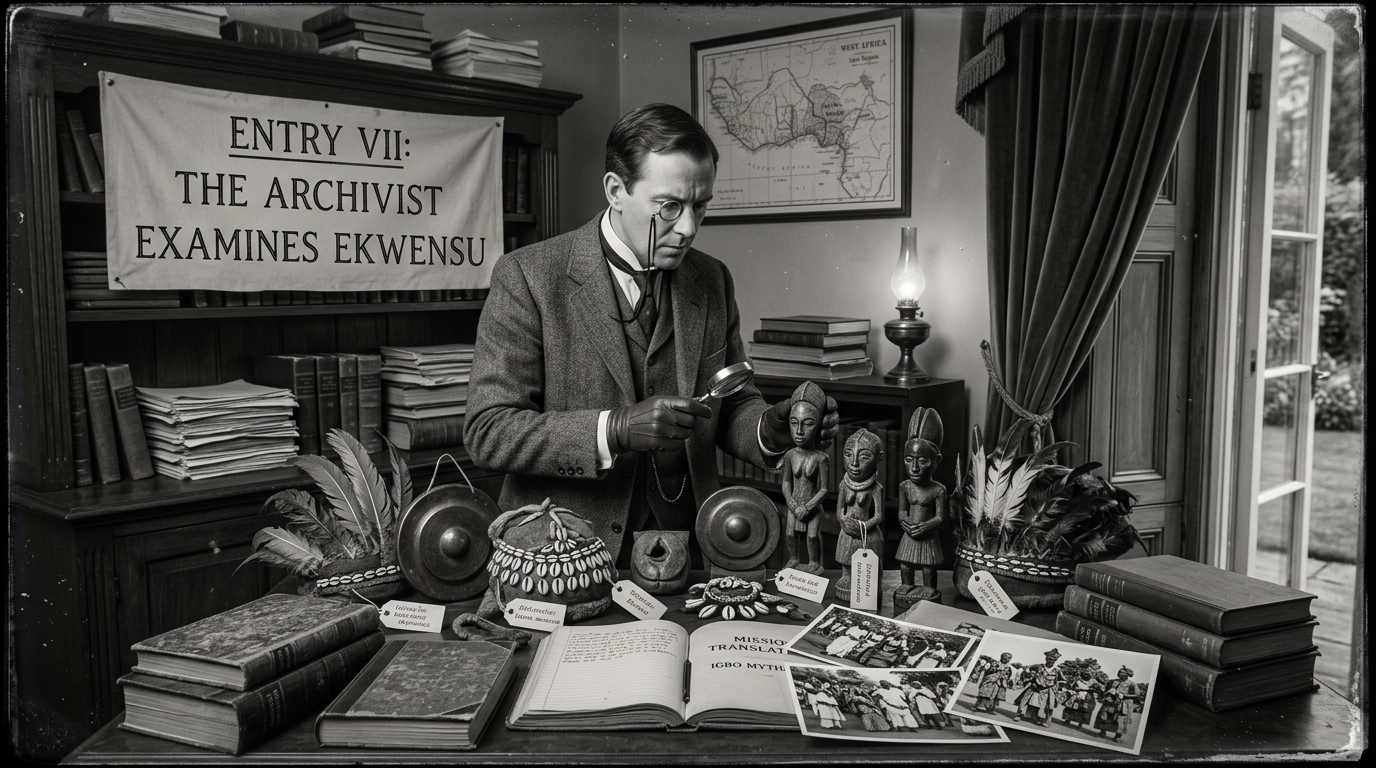
In Entry VII, the Archivist examines Ekwensu, the Igbo alusi of war, victory, and cunning, and how missionary translation made his name the Igbo word for Satan, setting out the shrines and festivals, the debate among Igbo scholars, and a structural parallel with Baal, while observing an outsider’s limits throughout.
-
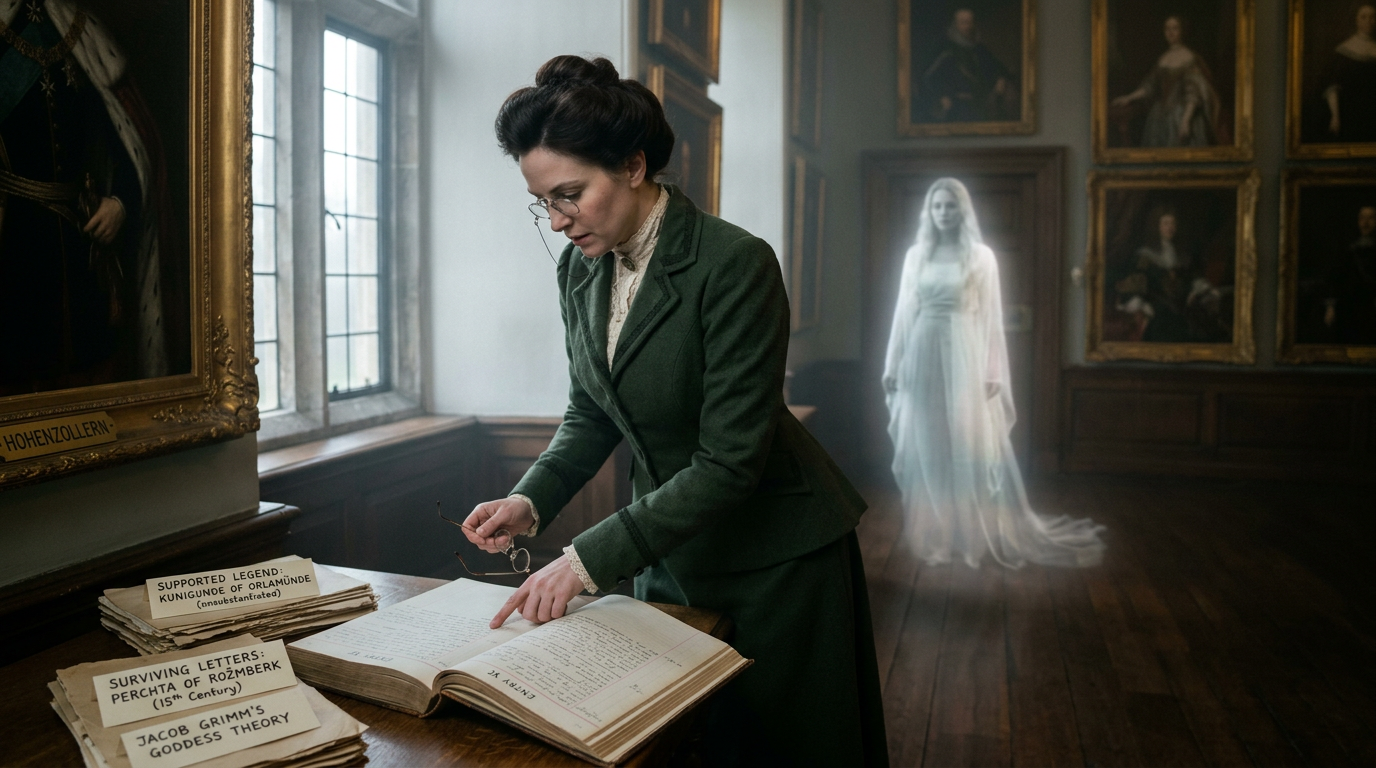
In Entry VI, the Archivist examines the Weiße Frau, the White Lady whose silent appearance foretold Hohenzollern deaths, weighing the unsupported legend of Kunigunde of Orlamünde, the surviving letters of Perchta of Rožmberk, and Jacob Grimm’s goddess theory, while an open ledger of deaths waits in Faulkenmire’s fog-bound portrait gallery.
-
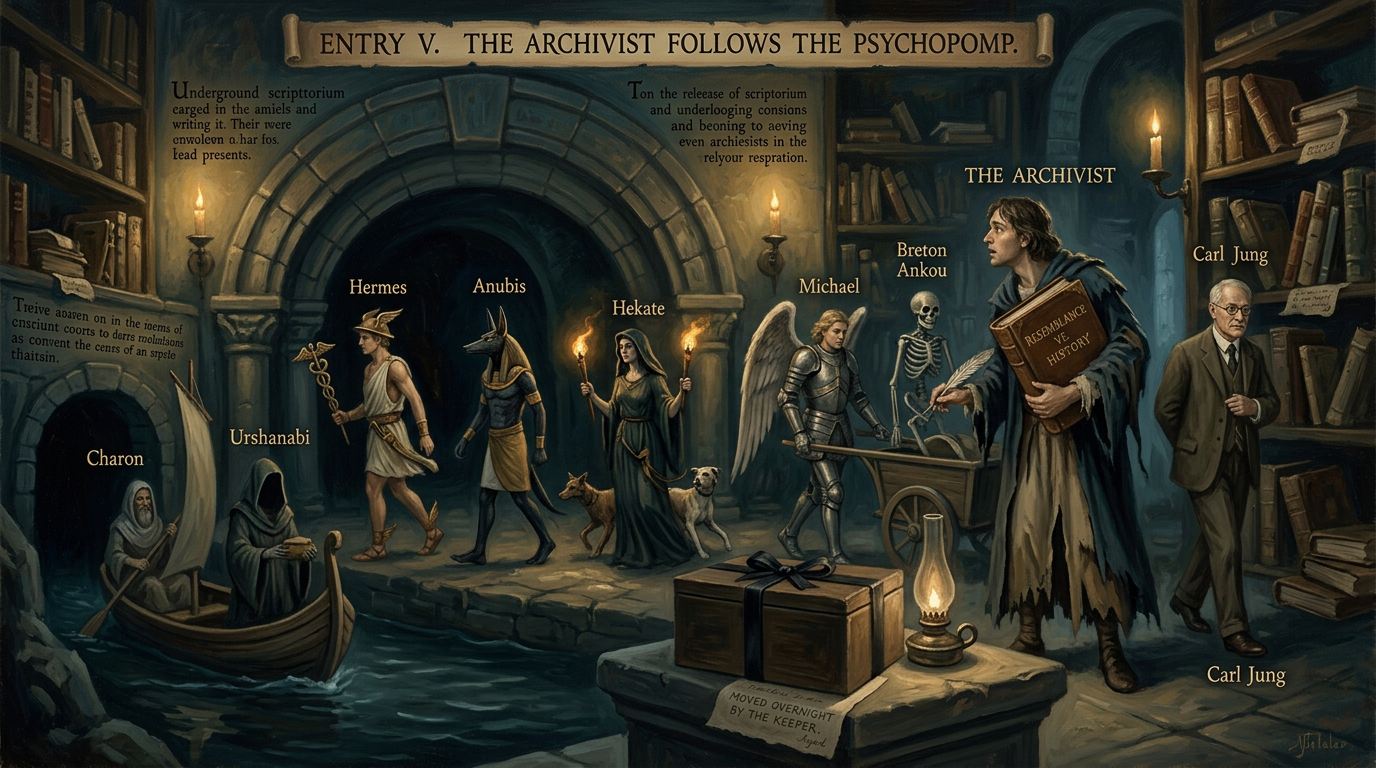
In Entry V, the Archivist follows the psychopomp, the guide of souls, from Hermes in the Odyssey through Charon, Urshanabi, Anubis, Hekate, Michael, and the Breton Ankou to Jung, distinguishing documented history from resemblance, while the black-ribboned river box, moved overnight by the Keeper, waits beside a lamp nobody lit.
-
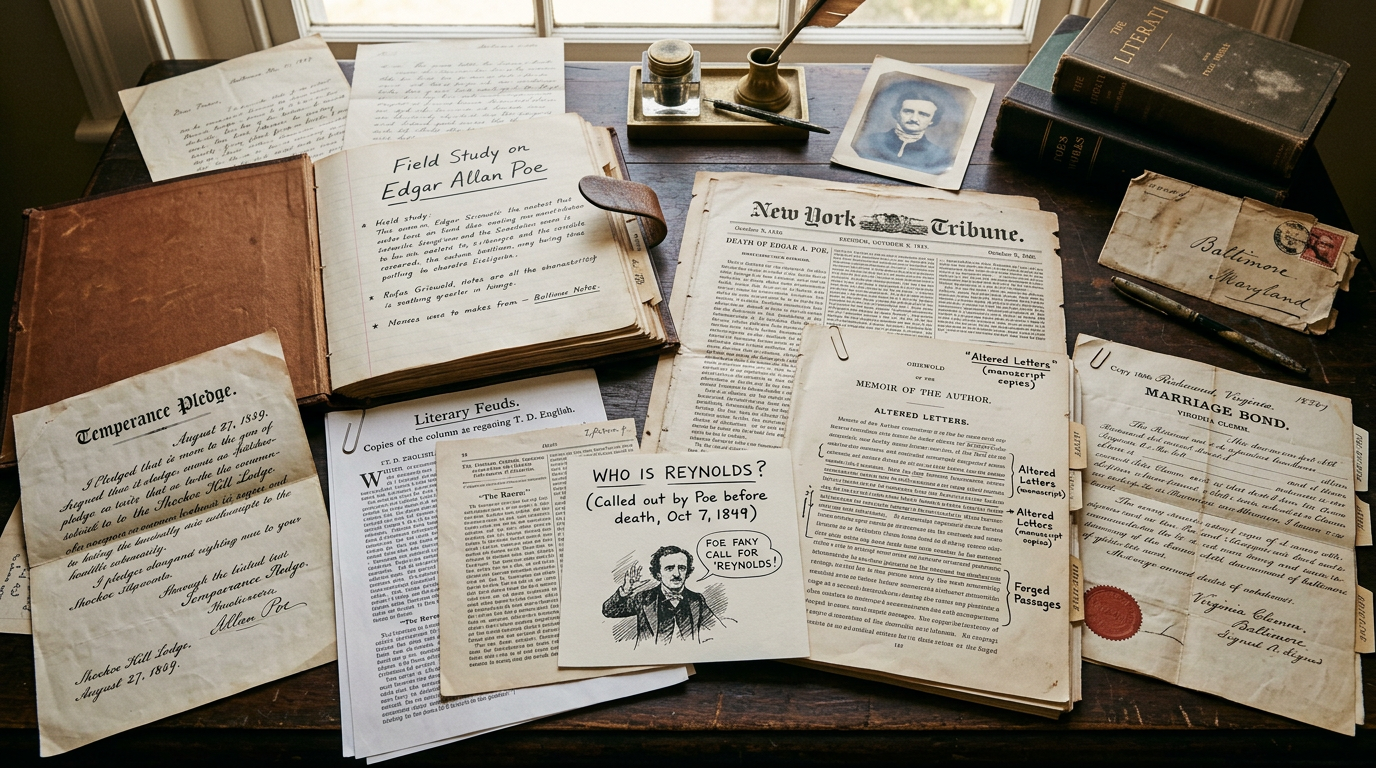
Companion to the Archivist’s journal entry on Edgar Allan Poe, this field study examines the documents behind his legend: Rufus Griswold’s hostile obituary, memoir, and altered letters, the 1836 marriage bond, the 1849 temperance pledge, the literary feuds, and the unidentified Reynolds whom Poe called for while dying in Baltimore.
-

The púca, Ireland’s shapeshifting spirit of Samhain, appears as a black horse, goat, eagle, or goblin, spoiling November blackberries and carrying riders on wild night journeys. This field study weighs its harmful and helpful tales and concludes it is neither angel nor demon, but an amoral spirit of the wild.
-

Drunk, cruel critic, child bride’s husband, opium fiend, murdered genius: which charges against Edgar Allan Poe survive the record? These journal entries weigh each accusation, trace how a rival’s false memoir built the legend, follow the women he loved and lost, and examine the five vanished days before his death.
-
Agrippina the Younger, sister, wife, and mother of emperors, was accused of incest, poisoning, and tyranny before her son had her murdered. This field study weighs those charges against hostile sources, asks whether she was wicked or merely powerful, and investigates her lost memoir and faint hope of its recovery.