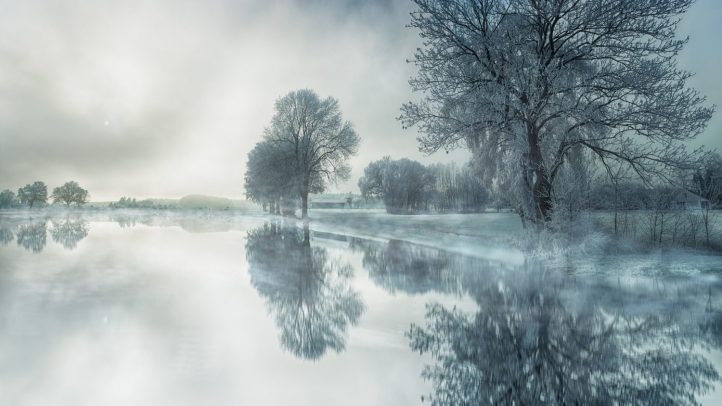
The Cailleach, or “Veiled One,” was a Celtic goddess who ruled over the winds and winter. Appearing as an old, veiled woman. She was the creator and destroyer and served as a patron of animals, particularly wolves. One of the great Celtic ancestors, the Cailleach, was the goddess of the cold and the winds. Sometimes known as the Veiled One of the Queen of Winter, the Cailleach determined the winter’s length and harshness. The Cailleach dwelled in Scotland, Ireland, and the Isle of Man. As both divine hag and creator deity. Many places remain dedicated to her within these regions.
The Cailleach appears primarily as a veiled old woman, sometimes with only one eye. She could leap across mountains and ride storms. The Veiled One was a creator deity that shaped much of the known landscape. Her tools of creation and destruction included her hammer, with which she could control storms and thunder. She cared for animals in all three Gaelic-speaking regions during the winter months. She was the patron of wolves. In Scotland, she also served as a deer herder.
The Cailleach ruled winter, and Brigid ruled Summer. On Samhain, or October 31st, the Celtic year ends, and winter begins, marking the return of the Cailleach. In Scotland and the Isle of Man, the Cailleach transforms into Brigid during Beltane, a fertility festival held on May 1st. The Cailleach was also a goddess of grain. The last sheath of grain harvested was dedicated to her and used to begin the next planting season.
Unfortunately, many of the Cailleach’s myths have faded from memory, but several rituals and traditions still exist. On Imbolc or February 1st of each year, the Cailleach runs out of firewood for the winter. In Ireland and Scotland, she collects firewood as an old woman. If she wishes for winter to last longer. She makes the day sunny and bright for her search. If she oversleeps, the day is stormy and gray. Tradition holds that if February 1st is gray and wintery, winter will be shorter that year. If the day is bright, winter will return due to her preparation. In America, this tradition was transformed into Groundhog Day, removing the Cailleach while retaining the central ritual.
Another tradition begins like this, the Cailleach, the Bodach, and their children appeared to the people of Glen Lyon and Glen Cailleach seeking shelter. The family was granted refuge. During this period, the surrounding glens became fertile. Before parting the area, the Cailleach gave the people a parting gift; the site would be eternally fruitful, provided they put up stones for her family between May 1st and October 31st–from Beltane to Samhain.
The Cailleach has appeared in literature throughout the ages. The 8th-century poem “Lament of the Old Woman” reflects on her faded youth and laments its loss. In Donald Alexander Mackenzie’s 20th-century retelling of Scottish folklore, the Cailleach became Beira, Queen of Winter. Lady Gregory’s translation of old Irish tales is an excellent source of Cailleach myths.
Outside of the Celtic world, the Cailleach bore similarities to the Greco-Roman Gaia The Cailleach was also similar to the Norse deity Skadi, the goddess of winter and darkness, as well as the Germanic Holle, wife of Wotan, also known as Odin, and master of winter’s cold. The Veiled One’s stormy hammer closely resembled Thor’s hammer, and the Cailleach’s behavior and appearance were near related to Thor’s foes, the frost giants. In Slavic Mythology, Baba Yaga carries many attributes of the Cailleach. An impossibly old woman was just likely to help as hinder. Baba Yaga made many appearances in Slavic folklore. She leaped chicken-legged but moved in the same way the Cailleach did when she traveled between mountains.
The Cailleach has often appeared in popular culture, including in Dungeons and Dragons. A Bheur hag took the Cailleach’s name and appearance as a blue-skinned, winter-based hag. In the fantasy television series Merlin, the Cailleach appeared when Morgana broke the veil between the living and the dead. She demanded a sacrifice in exchange for returning the Dorocha to the land of the dead, and though Arthur and Merlin offered themselves, Lancelot gave himself instead.
The Cailleach had many different attributes, some benevolent and some fearsome, but much like ourselves, she was neither good nor bad.
I’m curious about what you guys think about the Cailleach, the great Celtic goddess of winter.
 Wicked Dual Blog