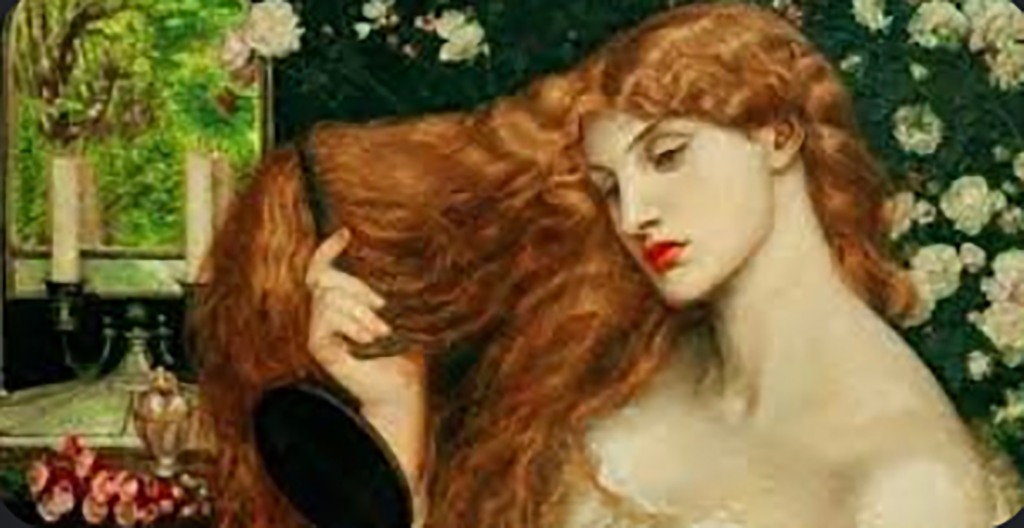
On May 23, 1934, at 14 Chatham Place, Elizabeth Siddal, better known as Lizzie, was dead.
The muse of Dante Gabriel Rossetti was found unconscious after an overdose of laudanum. However, some say that upon Dante’s return home, a note was pinned to his wife’s night-shirt. Reading, “Please look after Harry.”
Hi. Welcome to Wicked Dual. We’re looking into the mysterious death, which some say was the first supermodel. Elizabeth Siddal.
Elizabeth Siddal’s Early Years
At the family’s home of 7 Charles Street, Hatton Garden, Elizabeth Eleanor Siddal was born on July 25, 1829, to parents Charles Crooke Siddal and Elizabeth Eleanor Evans.
Her parents were of English and Welsh Descent. She had two older siblings, Ann and Charles Robert. By 1831, Elizabeth’s father’s cutlery-making business faced hard times, and they moved from Hatton Garden, a place known, at this time, as the center of the diamond trade in the U. K., to the boroughs of Southwark in South London.
Her younger siblings were born; Lydia, whom she was the closest to, Mary, Clara, James, and Henry.
Her educational background ranges from “an ordinary education, comfortable to her condition in life to having little to no formal education. There is no record of Elizabeth attending school. Yet coming from a working-class family, she was most likely educated in domestic skills. It would be another fifty years when the Education Act was enacted in 1870 and 1878. This act required education for girls. At a young age, Lizzie developed a love of poetry. In particular, Tennyson. She was said to discover his writing by finding one or two of his poems wrapped around some butter. This find, if true, encouraged her to write her own poetry and maintain a lifelong love of poetry.
The Pre-Raphelites Muse
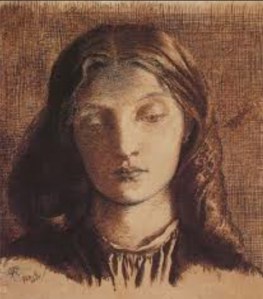
Siddal’s intro to the Pre-Raphelites comes with differing accounts. According to one story, she worked at a millinery in Cranbourne Alley, London, when she met Walter Deverell. Walter Deverell was an American-born British artist who noticed Siddal in the back of the shop while accompanied by his mother. Another account says that William Allingham had seen her and suggested she model for his friend Deverell. Who was struggling with a large oil painting based on the Shakespeare play Twelfth Night. However, they met, it was said he described Siddall “as magnificently tall, with a lovely figure, and a face of the most delicate and finished modeling… She has grey eyes, and her hair is like dazzling copper and shimmers with luster.” That first sight stuck with him for the rest of his short life.
Deverell, by 1848 showed influences from Pre-Raphaelite member Dante Gabriel Rossetti. This constituted taking inspiration from life versus pure imagination. In his Twelfth Night painting, he based Orsino on himself, Feste on his friend Dante Gabriel Rossetti, and Siddal was the inspiration for Viola and Cesario. This was the first time she sat as a model and the first time she interacted with Dante Gabriel Rossetti and the Pre-Raphaelite brotherhood.
But before we go further into the life of Lizzie Siddal. Let’s explain who the Pre-Raphaelites were.
The Pre-Raphelites

The Pre-Raphelites were a group of English painters, poets, and art critics founded in 1848 by William Holman Hunt, John Everett Millais, Dante Gabriel Rossetti, William Michael Rossetti, James Collinson, Frederic George Stephens, and Thomas Woolner.
The brotherhood was based on the Nazarene movement formed in the early 19th century by German Romantic painters. The group aimed to revise spirituality in art. The name Nazarene derives from critics postulating about their biblical dress and hairstyle.
The Pre-Raphelites sought a return to Quattrocento Italian art, rejecting classical poses created by Raphael; and adopted by mannerist painters.
They, in particular, repeated the influence of Sir Joshua Reynolds, founder of the English Royal Academy of Arts, whom they nicknamed, Sir Sloshua. According to William Michael Rossetti, “sloshy” meant “anything lax or scamped in the process of painting…meaning anything or person of a commonplace or conventional kind.”
By 1852 Siddal was depicted in etching for The Germ by Deverell. Portraying her as Viola once more. She also modeled for William Holman Hunt in the painting “A Converted British Family Sheltering a Christian Missionary from the Persecution of the Druids, and “Two Gentlemen of Verona, Valentine Rescuing Sylvia from Proteus.” Life was taking off for the young model against the backdrop of a rapidly changing world. Where in 1848, the Public Health Act was passed. An act that placed the supply and treatment of water and waste under single local authorities who could raise funds for improvements to tackle unsanitary conditions.
The Great Exhibition
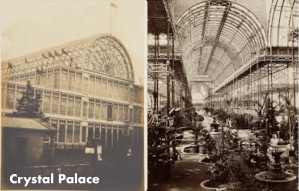
And in 1851, the Great Exhibition was opened. It was the first of a series of World’s Fairs – an international exhibition showcasing the achievements of nations and presenting the latest discoveries in science and technology.
The show occurred in a temporary built structure known as the Crystal Palace in Hyde Park, London, from May 1 to October 15. The show proved hugely popular worldwide, attracting over six million visitors over five months – the equivalent of a third of the entire population of Britain at the time.
Siddal Becomes Ophelia
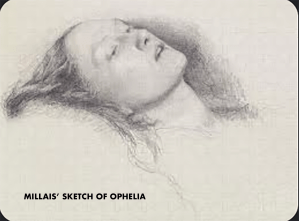
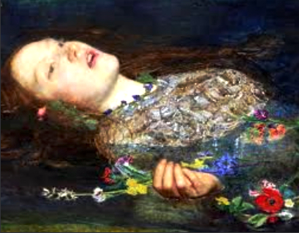
During the winter of 1852, Millais painted her most iconic representation. Ophelia.
Here, Siddal floated in a tub of water as Millais sketched for hours. To keep her warm, Millais used oil lamps. Often he was so focused on his sketches that he would cease to notice when the lamps went out.
Siddal never complained or mentioned when the lamps burned out. For this, she caught pneumonia and had to go to the hospital. Under the pressure of her father, who threatened to take legal action, he paid for her medical bills. She recovered, but her health would remain fragile for the rest of her life.
Though it is uncertain when Dante Rossetti met Elizabeth Siddal, it seems likely it was during the painting of Twelfth Night by his friend Deverell. Rossetti gave Siddal the nickname “Lizzie” when she entered the Pre-Raphaelite Brotherhood circle, and “the diminutive enhanced her youthful, dependent role.” Yet some sources state that growing up, her siblings would refer to her as “Lizzie.” By 1851, she had become Rossetti’s muse, and he began to paint her to the exclusion of nearly all others. He also stopped Siddal from modeling for others.
Gug + Dove Forever
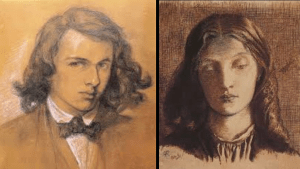
The relationship up to this moment was purely an intellectual one. Siddal has begun to be mentored by Rossetti. Yet by 1852, shortly after studying with Rossetti, the two became lovers. Rossetti moved her into his Chatham residence. Here the lovers became anti-social and consumed with one another. They coined affectionate nicknames for one another, such as “Guggums” or “Gug” and “Dove,” the latter one of Rossetti’s names for Siddal. He also shortened the spelling of her name to Siddal, dropping the second ‘l.’ Rossetti sketched a prolific amount of work depicting “Lizzie” as a woman of leisure, class, and beauty.
His best-known depiction of Elizabeth is Beata Beatrix, which shows a praying Beatrice (from Dante Alighieri), and was painted a year after her death in 1863.
Siddal-artist, poet, muse
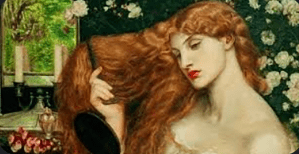
In 1854, Siddal painted a self-portrait that differed from the typical Pre-Raphaelite idealized beauty. Leading art critic John Ruskin in 1855 to subsidize her career and pay £150 per year in exchange for all the drawings and paintings she produced. Prevalent themes were Arthurian legends and other idealized Medieval themes. Her work was exhibited with the Pre-Raphelites in 1857 at Russell Place.
During Siddal’s career as an artist and poet from 1852 to 1861, she produced over 100 works. Siddal also wrote poetry during this period, often with dark themes about lost love or the impossibility of true love. “Her verses were as simple and moving as ancient ballads; her drawings were as genuine in their medieval spirit as much more highly finished and competent works of Pre-Raphaelite art,” wrote critic William Gaunt. Both Rossetti and Ford Madox Brown supported and admired her work.
It was during this time that her love of poetry returned. Her writing was filled with lost love and impossible longings.
In the poem Fragment of a Ballad, she writes:
Many a mile over land and sea
Unsummoned my love returned to me;
I remember not the words he said
But only the trees moaning overhead.
And he came ready to take and bear
The cross I had carried for many a year,
But words came slowly one by one
From frozen lips shut still and dumb.
How sounded my words so still and slow
To the great strong heart that loved me so,
Who came to save me from pain and wrong
And to comfort me with his love so strong?
I felt the wind strike chill and cold
And vapours rise from the red-brown mould;
I felt the spell that held my breath
Bending me down to a living death.
When Lovers Part

Shortly afterward, Siddal, whose health and relationship had worsened, gave up her annuity from Ruskin. Rossetti and Ruskin for some time controlled her life, and she desired to escape.
Using her savings, she took one of her sisters to the spa town of Matlock in Derbyshire.
Then, instead of returning to London, she traveled to Sheffield, her father’s birthplace, to stay with her cousins. Siddal soon moved into a lodging house; and enrolled at the Sheffield School of Art, determined to make it as an artist on her own.
Rossetti visited her occasionally, but letters from friends in London revealed his affairs with other women, and their relationship ended in the middle of 1858. Much of what happened in her life during the next couple of years remains a mystery.
It was the spring of 1860 and Siddal was dangerously ill. Her family contacted Ruskin. He told Rossetti, who rushed to be with Siddal, who had moved to the Sussex town of Hastings, a popular place for recuperating invalids. Rossetti arrived with a marriage license in hand.
Dante and Lizzie
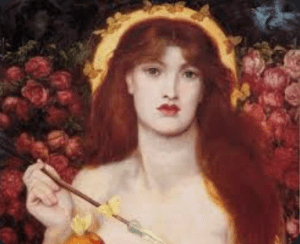
In Hastings, Siddal and Rossetti married at St. Clements church on May 23, 1860. At the time of her wedding, she was frail and ill that she had to be carried to the church, despite being a five-minute walk from where she was staying. No family or friends attended; instead, two locals were asked to be witnesses.
Siddal and Rossetti’s relationship was described as intense and all-consuming. Some of the couple’s tension came from their different backgrounds. Siddal came from a working-class family. While Rossetti came from a family of scholars and intellectuals.
It was no secret of Rossetti’s sibling’s extreme views of Lizzie. Their spoken and unspoken views are what Siddal believes was why Rossetti took over a decade to marry her. This was just a superficial belief of the deeper issue that Siddall felt Rossetti sought; to replace her with a younger muse.
On her wedding day, she was so frail and ill that she had to be carried to the church, a five-minute walk from where she was staying.
Experts argue on the reason for her poor health. Some say she suffered from tuberculosis. Others point to intestinal disease or even anorexia, but little to no evidence supports these arguments.
What is known is her long-time abuse of laudanum. Her addiction was brought on by depression and tragedy after the birth of a stillborn daughter. The death of her daughter thrust Siddal; into what we know today as post-partum depression.
An Ordinary Day
The evening of February 10, 1862, was an ordinary day, despite troubles in marriage due to Siddal’s depression and rumors of Gabrielle’s affairs.
The Rossetti’s went to dinner with the poet Algernon Charles Swinburne.
After returning home, Rossetti went to teach at the Working Men’s College.
His later account was that before he left, he saw Lizzie settled into bed–she took her usual dose of laudanum. He noted there was half a bottle left. When he returned from work, the bottle was empty.
Rossetti discovered her unconscious and was unable to revive her.
Yelling; for their landlady to fetch a doctor. The first doctor Rossetti called claimed to be unable to save her, upon which Rossetti sent for another three doctors, but it was no use.
She died at 7.20 a.m. on February 11, 1862, at 14 Chatham Place, their home, now demolished and covered by Blackfriars Station.
Although; her death was ruled accidental by the coroner, there are suggestions that Rossetti found a note. Reading, “Please look after Harry” (her invalid brother, who may have had a slight intellectual disability), supposedly “pinned … on the breast of her night-shirt.”
Their friend, Ford Madox Brown, advised Rossetti to burn her suicide note. A safeguard not to be declared a suicide and denied a Christian burial. Upon her passing, Lizzie was pregnant with their second child.
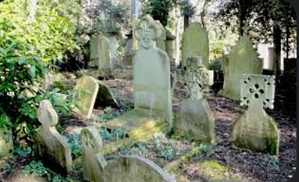
Siddal was buried with her father-in-law Gabriele on February 17 in the Rossetti family grave on the west side of Highgate Cemetary.
Later burials would include her mother-in-law, Frances Rossetti. Christina Georgina Rossetti, and William Michael Rossetti.
At last, Elizabeth Eleanor Siddal was laid to rest.
Unfortunately, that was not the case.
Howell Immortalizes Siddal
In her coffin, Dante had laid at her head a handwritten book of poems, which in August 1869, Rossetti authorized Charles Howell to disinter her coffin to retrieve them.
Charles Augustus Howell was a flamboyant teller of tales. He would later account for his perilous journey. Stating that at night, he crept into the graveyard. There were no lights, so he built a large fire.
What Howell said next immortalized Elizabeth Siddal as a porcelain-skinned ingenue. Untouched by mortality.
Howell recanted to Rossetti that she was preserved beautifully. He claimed she was not a skeleton but as beautiful as she had been in life, and her hair had grown to fill the coffin with a brilliant copper glow that shone in the firelight.
The poems Howell retrieved that night for Rossetti became part of his sonnet sequence entitled The House of Life.
This sequence contained the poem “Without Her,” a reflection on life once love has departed.
What of her glass without her? The blank grey
There where the pool is blind of the moon’s face.
Her dress without her? The tossed empty space
Of cloud-rack whence the moon has passed away.
Her paths without her? Day’s appointed sway
Usurped by desolate night. Her pillowed place
Without her? Tears, ah me! For love’s good grace,
And cold forgetfulness of night or day.
What of the heart without her? Nay, poor heart,
Of thee what word remains ere speech be still?
A wayfarer by barren ways and chill,
Steep ways and weary, without her thou art,
Where the long cloud, the long wood’s counterpart,
Sheds doubled up darkness up the laboring hill.
Rossetti’s reclaimed poetry was published in 1870 to great acclaim – although the story of his poems’ origin was kept a carefully guarded secret.
Final Thoughts
Lizzie Siddal died at 32, but her extraordinary legacy continues. Indebted to Howell’s gloriously conceived fiction as the immortal beauty of the original supermodel. Vanquished by life. The tragic heroine. She is Ophelia. Consumed by darkness and madness. Yet she was more than these things. She was Lizzie. A woman whose first love for the arts came by the wrappings of butter. She dreamt of life as a creator outside the men that placed her on a pedestal she never felt comfortable upon. She was more than the muse. The silent figure is suspended in water. She was a woman that dared to dream. It was a changing time to be more than what was expected at that time. And Lizzie, I believed, longed to change with it. She is forever immortalized. Remembered, but I believed her wish was to be cast out of the shadows of Hamlet’s loathing and into her own copper-filled light.
In Lizzie’s Own Words
Oh, grieve not with thy bitter tears
The life that passes fast;
The gates of heaven will open wide
And take me in at last.
Then sit down meekly at my side
And watch my young life flee;
Then solemn peace of holy death
Come quickly unto thee.
But true love, seek me in the throng
Of spirits floating past,
And I will take thee by the hands
And know thee mine at last.
-Early Death
Lizzie
 Wicked Dual Blog