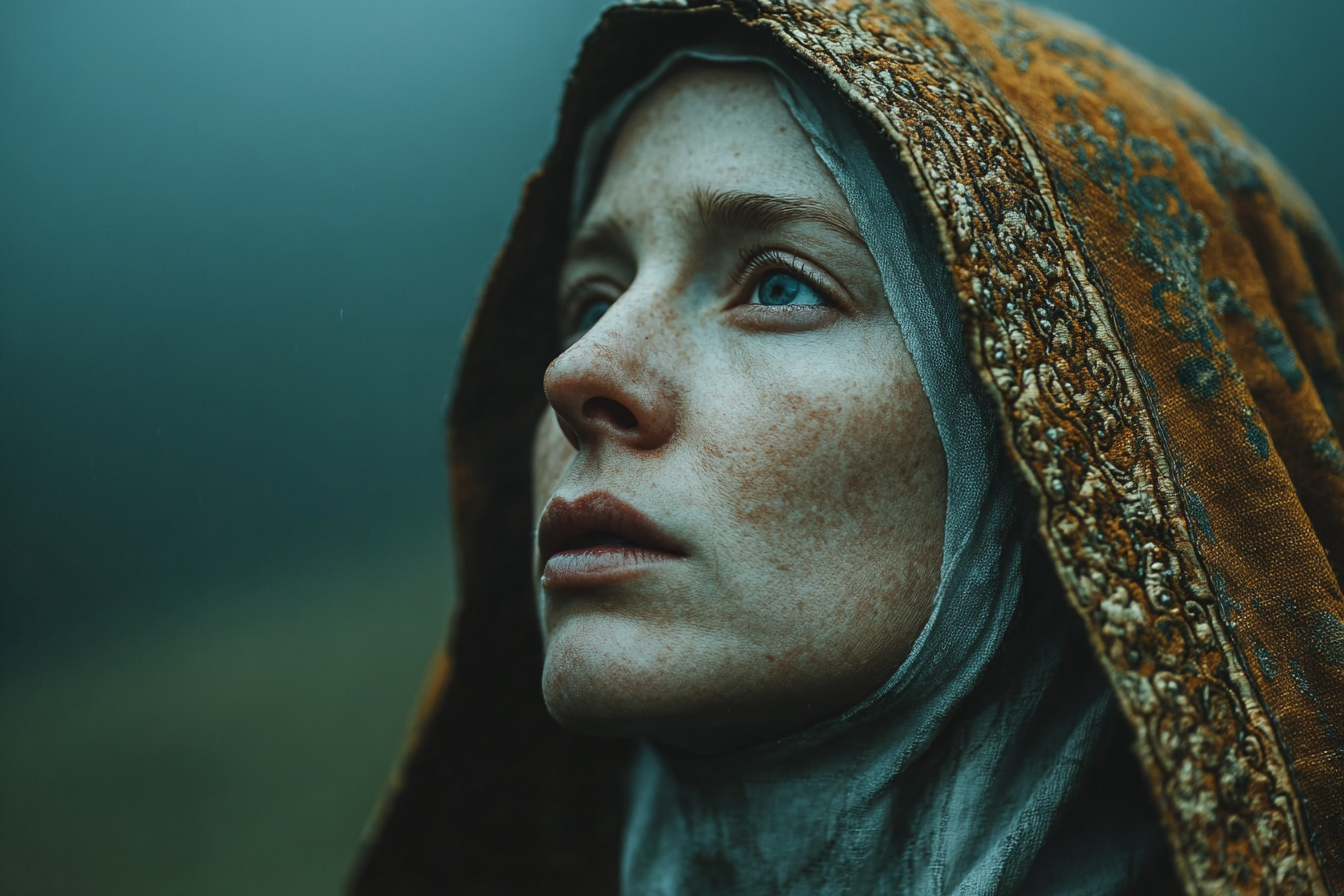

Two Brigids, One Legacy: An Introduction
In the misty crossroads of Irish history, where ancient beliefs blur into Christian devotion, one name echoes through the ages: Brigid. To some, she is a beloved saint—a miracle-working abbess who founded Kildare. To others, she is an exalted Gaelic goddess, patroness of poetry, healing, and the sacred flame. How did one figure come to embody both the divine and the saintly? This is the story of how a pagan goddess was woven into the fabric of Irish Christianity—and how she never truly left.
What’s in a Name? The Etymology of Exaltation
The name Brigid (Old Irish: Brigit; Modern Irish: Bríd) derives from the Proto-Celtic *Brigantī, meaning “the high one” or “the exalted one.” This root also gives us the name of the British Celtic goddess Brigantia, suggesting a pan-Celtic reverence for a divine feminine figure associated with sovereignty and height—both social and spiritual. The name itself hints at a figure of power and reverence, whether in the realm of gods or saints.
Divine vs. Saintly: Two Portraits of Brigid
Goddess Brigid appears in Irish mythology as a member of the Tuatha Dé Danann, the daughter of the Dagda and wife of Bres. She is described in Sanas Cormaic (Cormac’s Glossary) as a triple deity: Brigid the poet, Brigid the healer, and Brigid the smith. She is associated with domestic animals, wisdom, and sacred fire.
Saint Brigid, by contrast, is depicted in hagiographies as an abbess, miracle-worker, and founder of Kildare Abbey. She is often shown with a crozier, a lamp, or a cow—symbols of her pastoral and nurturing roles. Yet the visual and symbolic overlap is striking: both are linked to fire, fertility, and protection.
Myth and Memory: The Lives of Brigid
The Goddess: In myth, Brigid appears in texts such as Cath Maige Tuired, where she marries Bres and mothers Ruadán. When Ruadán is killed, she invents keening—a ritual lament—thus tying her to both life and death, creation and mourning. She is also associated with magical animals: oxen named Fea and Femen, a royal boar, and a royal ram—all symbols of prosperity and guardianship.
The Saint: Medieval hagiographies, such as those by Cogitosus and Ultan of Ardbraccan, describe Brigid as the daughter of a chieftain and an enslaved Christian woman. She performs miracles from a young age, gives away her father’s property to the poor, and eventually becomes a nun. She founded Kildare, a double monastery (for men and women), and became a symbol of Christian charity and power. Yet many of these tales—such as her expanding cloak or her control of weather—echo earlier pagan motifs.
Miracles and Magic: Where Faith and Folklore Meet
The miracles attributed to Saint Brigid often mirror the domains of the goddess:
– Multiplication of food and drink (butter, milk, beer)
– Healing and protection
– Control over nature and animals
– Association with fire (the eternal flame at Kildare)
These are not typical Christian miracles; they resonate deeply with the attributes of a fertility and sovereignty goddess. For example, the miracle of her cloak expanding to claim land parallels themes of territorial blessing known in Celtic myth.
Flame and Festival: The Cult of Brigid Through the Ages
Imbolc (1 February) is the traditional festival marking the beginning of spring. It was sacred to the goddess Brigid and was later adopted as Saint Brigid’s Day. Customs such as the making of Brigid’s crosses, leaving cloth outside for blessings, and tending a perpetual fire at Kildare all have pre-Christian roots. The survival of these traditions—even today, as a national holiday in Ireland—shows how deeply the goddess is embedded in the saint’s veneration.
Scholar’s Debate: Goddess, Saint, or Both?
Scholars are divided on the relationship between the two Brigids:
– Syncretism Theory: Scholars like Pamela Berger and Dáithí Ó hÓgáin argue that the saint is a Christianization of the goddess. Monks preserved her popularity by grafting her attributes onto a holy figure.
– Historical Reality Theory: Others, like Elva Johnston, caution against overemphasizing the pagan connection, suggesting that Saint Brigid may have been a historical person whose legacy absorbed mythological elements.
What is clear is that both figures served similar cultural functions: both were patrons of poetry, healing, and protection—a continuity that helped smooth Ireland’s transition from paganism to Christianity.
Brigid Today: From Ancient Springs to Modern Altars
In contemporary Neopagan and Wiccan traditions, Brigid (often spelled Brighid or Brid) is honored as a triple goddess of fire, inspiration, and craft. Her feast day, Imbolc, is one of the eight Sabbats. Many modern pagans see her as a symbol of feminine power, creativity, and resilience—a divine figure who transcended religious boundaries.
Conclusion: The Unbroken Thread
Brigid is more than a saint or a goddess—she is a cultural icon who embodies Ireland’s spiritual history. Her story illustrates how a people can reshape their sacred world without fully abandoning the old. Whether as a member of the Tuatha Dé Danann or as the Mary of the Gael, Brigid remains a symbol of healing, poetry, and the enduring power of the land itself.

Johnston, E. (2013). Literacy and Identity in Early Medieval Ireland. Boydell Press.
McCone, K. (1990). Pagan Past and Christian Present in Early Irish Literature. An Sagart.
Ó hÓgáin, D. (1999). The Sacred Isle: Belief and Religion in Pre-Christian Ireland. Boydell & Brewer.
Sanas Cormaic (Cormac’s Glossary). (c. 9th century). In Thesaurus Palaeohibernicus.
Wright, B. (2011). Brigid: Goddess, Druidess and Saint. The History Press.
Leave a Reply