
Introduction
Nestled on the edge of Europe, Ireland—Éire in the Irish language—is a land of profound contrasts. It is a country where ancient myths whisper through rolling green hills and where cutting-edge technology thrives in urban hubs. With a population of just over five million, this nation has shaped world literature, revolutionized economic policy, and navigated a complex historical relationship with its nearest neighbor, the United Kingdom. Ireland’s story is one of resilience: a journey from colonial subjugation to independence, from economic stagnation to the “Celtic Tiger” boom, and from sectarian strife to hard-won peace.
This article explores Ireland’s identity through multiple lenses—history, governance, economy, society, and culture—revealing how a small island on Europe’s Atlantic fringe has carved out a distinctive and influential role on the world stage.
What’s in a Name?
The very name Ireland is layered with meaning and historical significance. Its Irish language counterpart, Éire, derives from Ériu, the name of a Gaelic goddess and one of the three mythical queens of the Tuatha Dé Danann. The term itself comes from Old Irish Ériu, which in turn derives from the Proto-Celtic ɸīweriyū, meaning “fertile land” or “abundant place.”
The state officially describes itself as Ireland (in English) and Éire (in Irish), though it is often referred to as the “Republic of Ireland” to distinguish it from Northern Ireland, which remains part of the United Kingdom. This distinction is more than semantic—it reflects a history of contested identity, political division, and ultimately, constitutional evolution.
A Turbulent History
Ireland’s historical narrative is marked by resistance, revival, and reconciliation.
For centuries, Ireland was governed as part of the British Empire. The Great Famine (1845–1849) was a catastrophic turning point, resulting in mass death and emigration that halved the island’s population. In its wake, movements for land reform and home rule gained momentum, led by figures like Charles Stewart Parnell.
The early 20th century saw the rise of militant republicanism. The 1916 Easter Rising—though initially a military failure—galvanized public opinion against British rule. The subsequent War of Independence (1919–1921) led to the Anglo-Irish Treaty and the establishment of the Irish Free State in 1922. The treaty, however, partitioned the island and sparked the Irish Civil War (1922–1923), a conflict that left deep political and social divisions.
Becoming a Republic
In 1937, a new constitution reaffirmed Ireland’s sovereignty, and in 1949, the Republic of Ireland Act severed final constitutional ties with Britain. Ireland joined the United Nations in 1955 and the European Economic Community (now the EU) in 1973, steps that further integrated the nation into the international community.
The Troubles in Northern Ireland cast a long shadow over the late 20th century, but the Good Friday Agreement of 1998 marked a historic breakthrough, establishing peace and cross-border cooperation.
Land and Landscape
Ireland’s geography has shaped its culture, economy, and way of life.
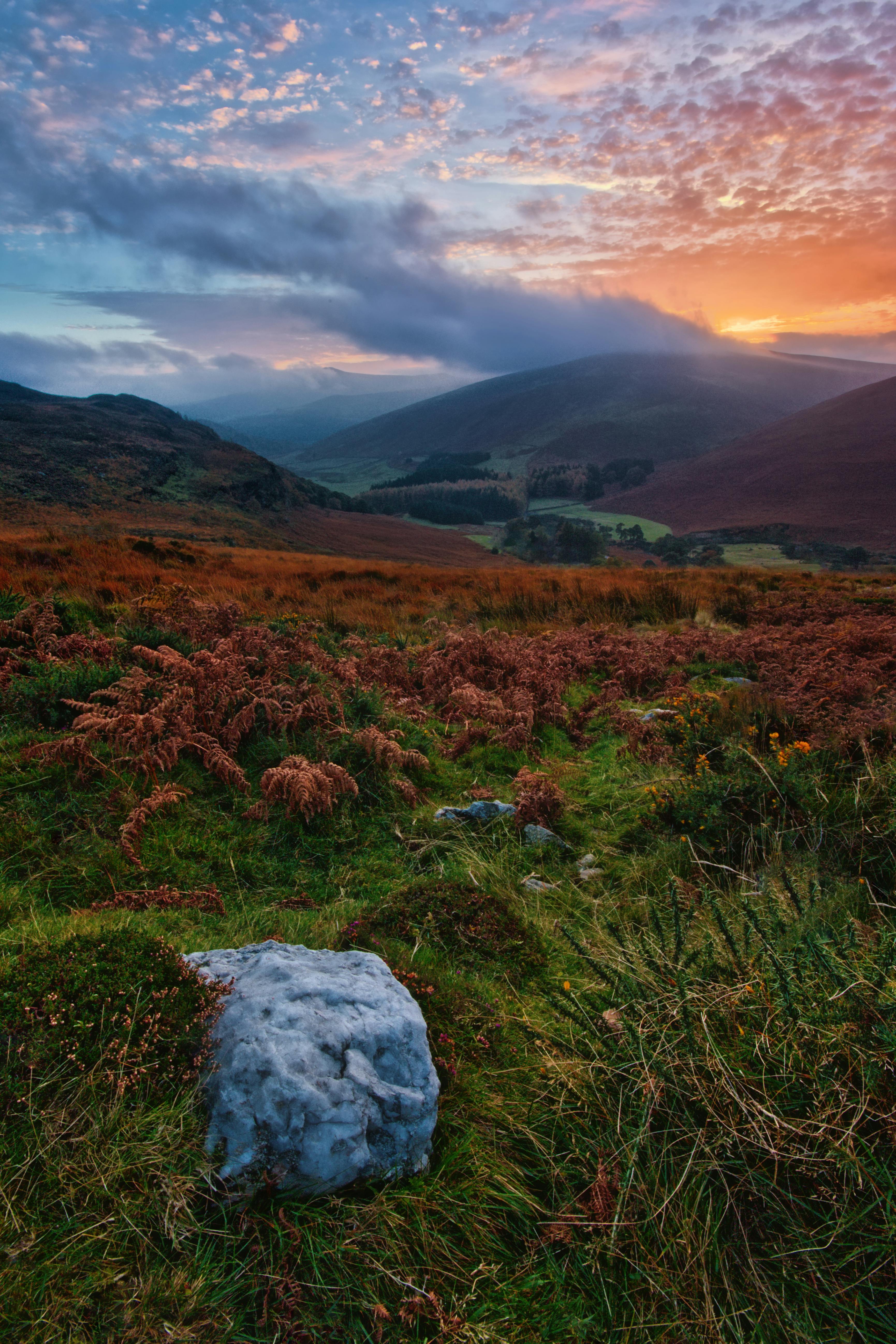
The island’s western coast is rugged and dramatic, with cliffs, peninsulas, and islands battered by Atlantic storms. In contrast, the eastern lowlands are more gently rolling, home to the majority of the population and the capital city, Dublin. The River Shannon, the longest river in Ireland, flows southward through the heart of the country, while Carrauntoohil in County Kerry stands as its highest peak.
Ecologically, Ireland is one of Europe’s least forested nations, with only about 10% tree cover—a stark decline from the ancient woodlands that once covered the island. Much of the land is dedicated to agriculture, which remains a vital sector despite urbanization.
Ireland’s climate is temperate and maritime, influenced by the Gulf Stream. It is known for its changeable weather—soft rains, sudden sunshine, and a lushness that has earned it the nickname “the Emerald Isle.”
Government and Politics
Ireland is a parliamentary democracy with a written constitution. Its political structure reflects both republican principles and unique national characteristics.
The national parliament, the Oireachtas, consists of two houses:
– Dáil Éireann: The lower house, with 174 members elected by proportional representation.
– Seanad Éireann: The upper house, composed of 60 members appointed and elected through various channels.
The President (Uachtarán) serves as head of state, with largely ceremonial duties. Real executive power rests with the Taoiseach (prime minister), who is nominated by the Dáil and appointed by the President.
Political Parties and Neutrality
Ireland’s political landscape has long been dominated by Fianna Fáil and Fine Gael, both descended from factions in the Civil War. Smaller parties like Sinn Féin, Labour, and the Greens have also played significant roles.
A cornerstone of Irish foreign policy is military neutrality. Ireland is not a member of NATO but contributes to UN peacekeeping missions and is part of the EU’s Common Security and Defence Policy.
The Irish Economy: From Protectionism to Prosperity
Few nations have undergone an economic transformation as dramatic as Ireland’s.
The Celtic Tiger and Beyond
For much of the 20th century, Ireland was a protectionist, agrarian economy. This changed in the 1990s with the advent of the “Celtic Tiger”—a period of rapid growth driven by foreign investment, EU funds, education reform, and corporate tax incentives.
The 2008 global financial crisis hit Ireland hard, leading to a banking collapse and an EU-IMF bailout. Yet by the mid-2010s, Ireland had rebounded, emerging as a European hub for technology, pharmaceuticals, and finance.
Modern Economic Profile
Today, Ireland boasts one of the highest GDP per capita rates in the world, though this is influenced by the presence of multinational corporations. Key sectors include:
– Technology (Apple, Google, Microsoft)
– Pharmaceuticals and medical devices
– Agri-food and beverages
– Financial and international services
Ireland’s low corporate tax rate (12.5%) has been both an engine of growth and a source of international controversy, positioning the country at the center of debates on tax fairness and globalisation.
Society and Demographics
Ireland’s population is youthful, educated, and increasingly diverse.
Population Trends
After decades of emigration, Ireland’s population began growing steadily in the late 20th century. The 2022 census recorded over 5.1 million people, with significant immigration from the EU, UK, India, Brazil, and elsewhere.
Language and Identity
Irish (Gaeilge) is the national and first official language, though English is dominant in daily life. The Gaeltacht regions, where Irish is spoken communally, are culturally significant and supported by the state.
Religion and Secularisation
Once overwhelmingly Catholic, Ireland has secularised rapidly. Church influence has waned in the wake of scandals and social change, though Catholicism remains the largest denomination. The 2015 marriage equality referendum and 2018 repeal of the abortion ban reflected a society embracing liberal values.
Culture: The Soul of Ireland
Irish culture is a blend of ancient tradition and modern creativity.
Literature and Storytelling
Ireland has produced some of the world’s greatest writers, including James Joyce, W.B. Yeats, Samuel Beckett, Seamus Heaney, and Sally Rooney. Its literary tradition is rooted in oral storytelling, myth, and a deep engagement with language.
Music and Dance
From traditional sean-nós singing to rock bands like U2, Ireland’s musical influence is global. Irish stepdance, popularized by Riverdance, and traditional pub sessions remain vibrant expressions of national identity.
Sports
Gaelic games—football, hurling, and camogie—are central to Irish life, organized by the Gaelic Athletic Association (GAA). Soccer, rugby, and golf also enjoy widespread popularity.
Food and Festivals
Irish cuisine has evolved from simple staples to a dynamic food scene, emphasizing local produce and seafood. The pub remains a social institution, and festivals like St. Patrick’s Day are celebrated worldwide.
Conclusion: Ireland in the 21st Century
Ireland has journeyed from a struggling post-colonial state to a confident, open, and innovative nation. Its ability to balance economic growth with social progress, and to honor its past while embracing change, offers lessons in resilience and adaptation.
Challenges remain—housing affordability, regional inequality, climate change, and the ongoing implications of Brexit—but Ireland’s future looks bright. As a committed EU member, a leader in technology and science, and a custodian of a rich cultural heritage, Ireland continues to make its mark on the world.
In the words of poet Seamus Heaney, Ireland is a place where “hope and history rhyme.” Its story is still being written—a testament to the enduring spirit of its people.

Central Statistics Office. (2022). Census of Population 2022. Dublin: Stationery Office.
Foster, R. F. (1988). Modern Ireland: 1600–1972. London: Penguin Books.
Lee, J. J. (1989). Ireland 1912–1985: Politics and Society. Cambridge: Cambridge University Press.
Leave a Reply