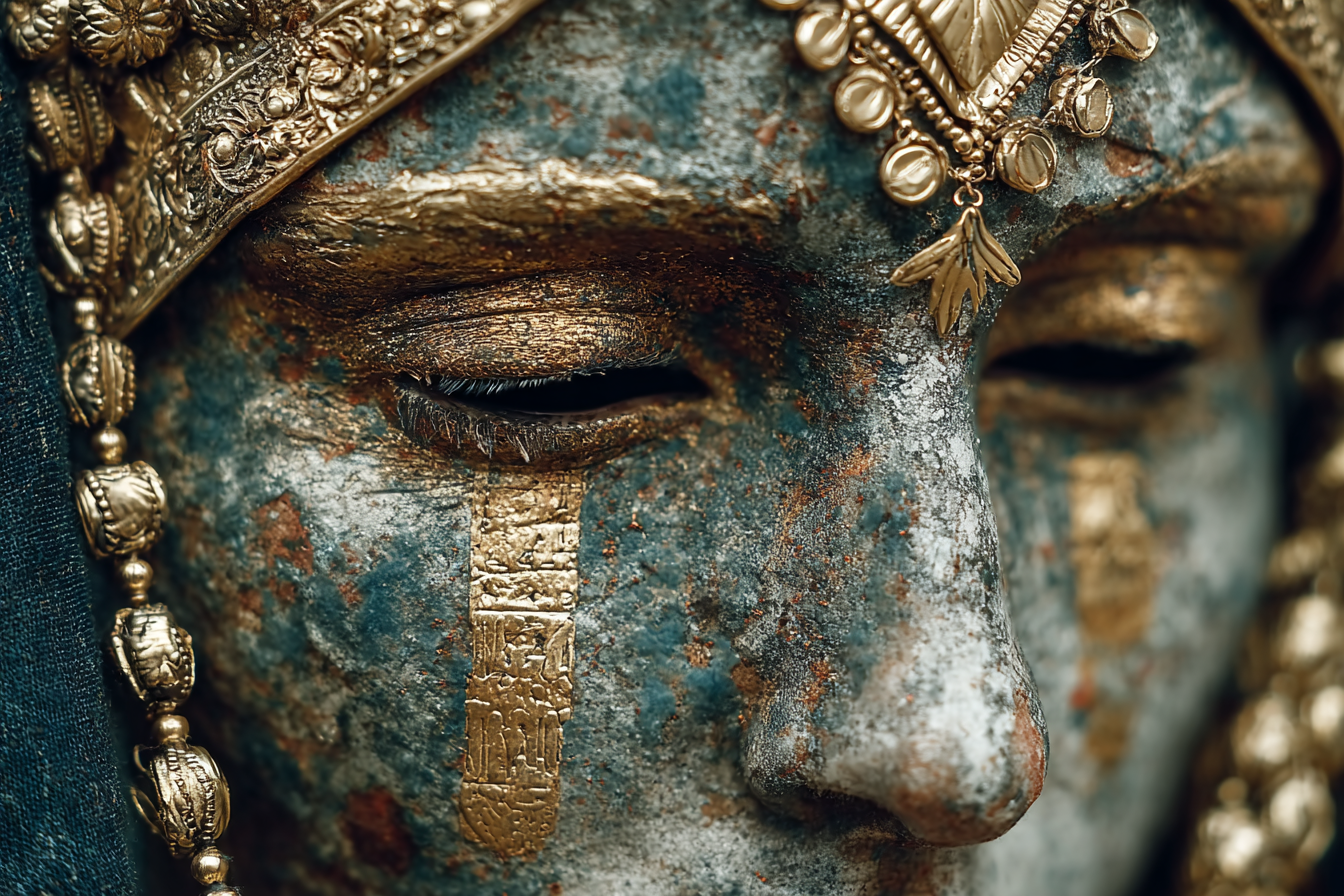
Introduction: The Land of Enchantment and Fear
In the shadow of Mount Olympus, where the gods themselves were said to dwell, there lay another, darker realm of power: Thessaly. To the ancient Greeks, this northern region was not just a land of fertile plains and wild mountains—it was the heartland of witchcraft, a place where women wielded supernatural forces that could bend fate, command the dead, and terrify even the bravest of heroes. While modern audiences might picture a generic “witch” stirring a cauldron, the reality was far more complex—and far more fascinating. Thessaly produced two distinct kinds of magical practitioners: the pharmakis, a healer and herbalist, and the goēs, a fearsome master of rituals and necromancy. This article delves deep into the myths, texts, and archaeology behind one of history’s most enigmatic magical traditions, separating legend from fact and revealing why Thessaly remained, for centuries, the undeniable capital of ancient sorcery.
The Pharmakis vs. the Goēs: Herbalist or Necromancer?
To understand Thessalian witchcraft, one must first abandon the homogenized idea of a “witch.” Ancient Greek sources distinguish carefully—and often fearfully—between two primary types of magical experts: the pharmakis (φαρμακίς) and the goēs (γόης).
The pharmakis was fundamentally a practitioner of pharmaka—substances derived from plants, minerals, or animal parts that could heal, harm, or alter consciousness. The term itself shares a root with pharmakon, which could mean medicine, poison, or magical substance, depending on context. These women were often knowledgeable herbalists, sometimes even respected within their communities for their understanding of nature’s secrets. They prepared love potions, healing salves, and protective amulets. In many ways, the pharmakis operated within a tradition of folk medicine, blending empirical knowledge with ritual practice.
By contrast, the goēs (often translated as “sorcerer” or “wizard,” but more accurately “necromancer” or “ritual magician”) dealt not in herbs but in spirits. The term derives from goos, meaning “lamentation,” pointing to their association with rites for the dead. A goēs was a master of invocation, divination, and necromancy—the art of summoning and questioning the deceased. This was not medicine; it was high-stakes ritualism, often conducted at night, in remote places, and involving animal sacrifice, spoken spells (epōidai), and inscribed curses (katadesmoi). The goēs was far more likely to be feared than respected, seen as trafficking with chthonic powers and destabilizing the natural order.
So where did the Thessalian witch fall? The answer is: both, and often somewhere in between. A practitioner might use herbs in a ritual context or invoke Hecate while preparing a pharmakon. The distinction was fluid, but the dual archetype helps explain why Thessaly was so notorious—it produced witches who could heal or harm with herbs, and witches who could pull the dead from their graves.
Hecate’s Homeland: Why Was Thessaly the Epicenter of Witchcraft?
If magic was practiced across the Greek world, why was Thessaly so uniquely associated with it? The reasons are geographic, cultural, and theological.
Geographical Isolation and Wild Landscapes
Thessaly was encircled by mountains—Olympus to the east, Pindus to the west—creating a somewhat isolated region with a reputation for wildness. Its landscapes included dense forests, treacherous mountains, and shadowy valleys—ideal settings for gathering magical herbs and performing secret rites. This terrain was thought to be inhabited by nymphs, spirits, and darker entities, making it a natural home for those who communed with the unseen.
Cultural Syncretism and Foreign Influences
Thessaly was a cultural crossroads. Its inhabitants were considered descendants of Aeolian and Ionic Greeks, but the region also had strong connections to Thracian and Macedonian traditions—cultures the Athenians viewed as “barbaric” and spiritually potent. This blending of Greek and non-Greek beliefs may have enriched and intensified local magical practices, creating a syncretic form of sorcery that seemed exotic and powerful to outsiders.
The Power of Thessalian Women
Thessaly was also known for the relative autonomy and influence of its women—an anomaly in the patriarchal Greek world. Figures such as the mythical Thessalian queen Hippodameia or the historical penestai (serf-class women with certain rights) suggest a social landscape in which women could wield tangible power. This cultural context may have fostered the image of the assertive, independent witch—a woman who answered to no man, only to the gods and her own craft.
Hecate’s Stronghold
Most importantly, Thessaly was considered the earthly home of Hecate, the goddess of magic, crossroads, and the underworld. She was the patron deity of witches, and her worship was particularly strong in the region. Thessalian witches were thought to be her chief devotees, granted exceptional power through her favor. Rituals to Hecate often took place at crossroads or in graveyards, reinforcing the region’s association with liminal, dangerous magic.
Beyond the Famous Names: Erictho and the Lesser-Known Witches of Thessaly
While Circe and Medea are the most famous witches of Greek myth—both often linked to Thessaly—they are only part of the story. Lesser-known but equally compelling figures emerge from literary sources, revealing the depth and darkness of Thessalian witchcraft.
Erictho: Lucan’s Monstrous Necromancer
The most terrifying depiction of a Thessalian witch comes from Lucan’s Pharsalia, a Roman epic about the civil war between Caesar and Pompey. Erictho is not just a witch; she is a symbol of absolute corruption. She lives in abandoned tombs, uses corpses in her spells, and can control the fate of battles. In one gruesome episode, she reanimates a dead soldier to foretell the outcome of the war. Lucan describes her in visceral detail:
“Her face is gaunt and pallid with a hellish sickly hue; her awful countenance is overcast with uncombed locks… She knows the gods of heaven and the gods of hell; and if she utters a prayer, it is never for grace or help, but for evil.”
Erictho embodies the goēs archetype pushed to its extreme: a figure of pure horror, utterly divorced from community, nature, or divinity.
The Witches in Apuleius’s The Golden Ass
In Apuleius’s novel, the protagonist Lucius encounters witches in Thessaly who transform him into a donkey. These women—Meroe and Panthia—are ruthless and powerful. They murder a lover, replace his heart with a sponge, and perform magic that blurs the line between illusion and reality. Apuleius portrays them as both pharmakeis and goētes: they use potions and rituals, embodying the full spectrum of Thessalian magic. Their actions are not heroic or tragic—they are selfish, cruel, and deeply human.
Other Textual References
Other writers, such as Plato and Theocritus, also reference Thessalian witches in passing, always with a mix of fascination and dread. These accounts collectively build an image of Thessaly not as a land of fairy-tale enchantment, but as a place where magic was real, dangerous, and deeply embedded in daily life.
The Tools of the Trade: Pharmaka, Katadesmoi, and Epōidai
What did Thessalian witchcraft actually look like in practice? Archaeology and text give us a clear—and often chilling—picture.
Pharmaka: The Power of Substances
Thessalian witches were famed for their knowledge of herbs. Pharmakon could refer to:
– Aconite (wolf’s bane), a deadly poison.
– Belladonna and mandrake, used for potions and trance states.
– Hemlock, famously used in the execution of Socrates.
These were not merely “natural” remedies; they were ritually gathered, often under the light of the moon or with invocations to Hecate. The same plant could heal or kill—and in the hands of a witch, it could also enchant.
Katadesmoi: Curse Tablets
Among the most revealing archaeological finds are katadesmoi (binding tablets)—thin sheets of lead inscribed with curses, then folded and pierced with a nail. These were placed in graves, wells, or sanctuaries to invoke chthonic powers. A typical katadesmos might ask a god or spirit to “bind” an enemy—silencing them in court, causing business failure, or inspiring unrequited love. Hundreds have been found across the Greek world, but those from Thessaly are particularly elaborate, suggesting a local specialty.
Epōidai: Incantations and Spells
The spoken word was itself a tool of power. Epōidai were ritual incantations, often in poetic meter, used to summon gods, compel spirits, or curse victims. These were not casual phrases; they were precise, formulaic, and required correct pronunciation and intention. Thessalian witches were said to have particularly potent epōidai, capable of “drawing down the moon”—a phrase symbolizing ultimate control over nature.
Ritual Objects
Knives (machaira), wands, and incense burners were also part of the witch’s toolkit. Animal sacrifice—especially of black dogs or sheep—was common in necromantic rites, offering blood to appease underworld deities.
Conclusion: Between Myth and Reality
Thessalian witchcraft was neither pure fantasy nor simple superstition—it was a complex, culturally embedded practice that blurred the lines between religion, medicine, and magic. The pharmakis and the goēs represent two sides of the same coin: one rooted in the natural world, the other in the supernatural. Together, they made Thessaly a place of awe and terror, where women held power that could rival that of gods and heroes.
This legacy endures not because it was a mere story, but because it spoke to very real human themes: the desire for control, the fear of death, and the allure of the unknown. By examining the sources—from Lucan’s grotesque Erictho to the leaden katadesmoi buried in graves—we come closer to understanding how the ancient Greeks viewed power, gender, and the boundaries of their world.
The witches of Thessaly remind us that magic, in the end, is about the human need to reach beyond the possible—whether through a herb, a spell, or a whispered prayer to the dark goddess Hecate.

Dickie, M. W. (2001). Magic and Magicians in the Greco-Roman World. Routledge.
Lucan. (c. 65 CE). Pharsalia. (Trans. J. D. Duff, 1928). Harvard University Press.
Apuleius. (c. 170 CE). The Golden Ass. (Trans. P. G. Walsh, 1994). Oxford University Press.
Graf, F. (1997). Magic in the Ancient World. Harvard University Press.

One response to “ The Witchcraft Capital of Ancient Greece: Unmasking the Dark Secrets of Thessaly’s Sorceresses”
[…] part of a broader tradition of Thessalian witchcraft that fascinated both Greek and Roman writers. Thessaly was renowned in antiquity as a land of potent magic, potions, and spells. It was said that its […]