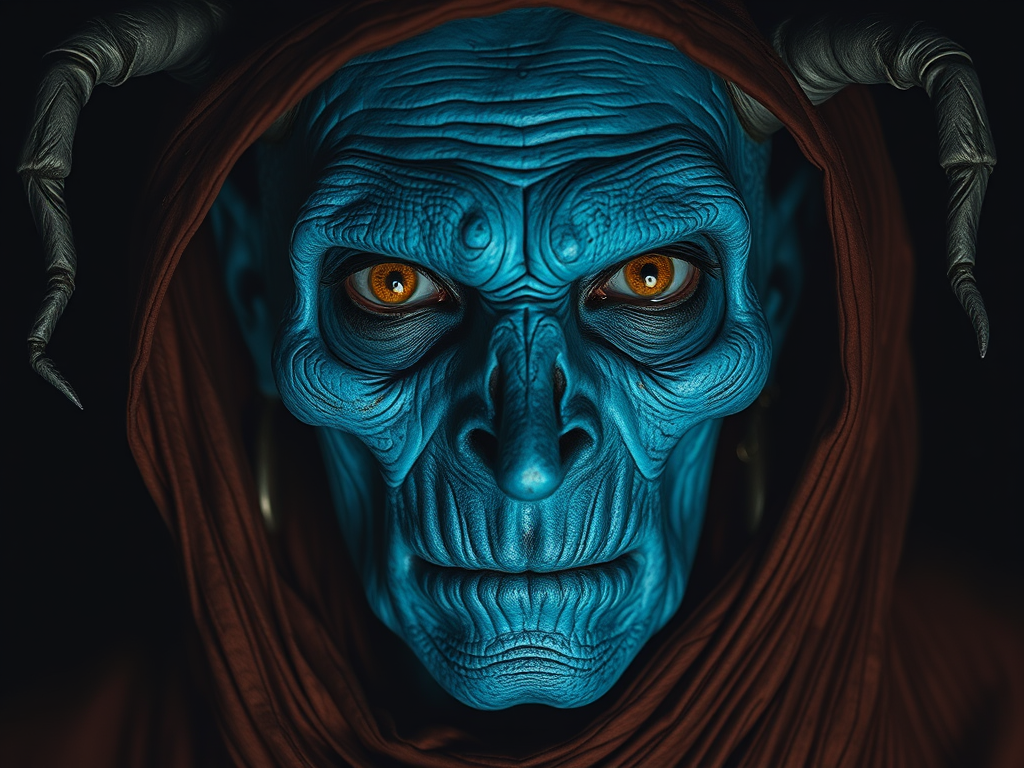

Introduction: A Night in the Lowcountry
Imagine a moonless night in the marshes of South Carolina’s Sea Islands. The air hums with cicadas, and the scent of pluff mud mingles with the brine of the Atlantic. Here, in the heart of Gullah/Geechee country, elders whisper warnings of a creature that defies flesh and bone—the Boo Hag. More cunning than a vampire, more grotesque than a ghost, this entity stalks the vulnerable, skins them alive, and wears their bodies like a suit. But the Boo Hag is no mere campfire tale. Rooted in centuries of African diasporic resilience, it embodies primal fears of deception, spiritual theft, and the fragility of identity.
Origins: The Gullah/Geechee Legacy
The Gullah/Geechee people, descendants of enslaved West and Central Africans, forged a unique culture in the isolation of the Southeastern U.S. coast. Their traditions—a tapestry of African spirituality, Christianity, and survival—gave rise to folklore rich with symbolic guardians against oppression. Among these, the Boo Hag emerged as a cautionary force.
Dr. Margaret Washington Creel, in A Peculiar People (1988), notes that Gullah stories often served as “metaphorical resistance,” blending Kongo and Angolan cosmologies with the trauma of enslavement. The Boo Hag, a soul-sucking shapeshifter, reflects fears of exploitation and the erasure of self—themes all too familiar to a people stripped of autonomy.
Anatomy of a Monster: The Boo Hag Unveiled
Unlike European vampires, the Boo Hag lacks a physical form. Described as a “skinless, red-muscled creature” (Jones-Jackson, 1987), it sustains itself by stealing human energy (life-force), not blood. By night, it hunts, peeling skin from victims to disguise itself by day. Its absence of a skeleton allows it to slip through cracks, evading detection until it’s too late.
Key traits:
– Skinless Form: Raw and grotesque, requiring a “skin suit” to blend in.
– Energy Vampirism: Drains breath or vitality as one sleeps.
– Nocturnal Rituals: Returns before dawn to reclaim its gruesome attire, lest it be exposed.
Failure to retrieve its stolen skin condemns the Boo Hag to roam eternally exposed—a fate worse than death in Gullah cosmology.
Cultural Symbolism: Deception and Spiritual Theft
The Boo Hag is more than a monster; it’s a metaphor. For the Gullah/Geechee, whose ancestors endured the theft of land, language, and liberty, the creature symbolizes:
1. Identity Erasure: Wearing another’s skin mirrors the dehumanization of slavery.
2. Hidden Threats: Its ability to mimic trusted figures warns of betrayal by those closest.
3. Spiritual Vigilance: Survival depends on awareness—of both seen and unseen dangers.
Charles Joyner, in Down by the Riverside (1984), links such tales to communal values: “Folklore preserved their humanity, teaching vigilance against exploitation.”
Protection: Wards and Wisdom
To repel Boo Hags, Gullah traditions prescribe:
– Haint Blue: Painting doorframes and shutters with indigo-blue pigment, believed to confuse spirits.
– Sweetgrass Baskets: Woven in African patterns, these trap negative energy.
– Scripture and Song: Psalms and spirituals sung at night to invoke divine protection.
These practices, as documented in Gullah Culture in America (Cross, 2008), blend practicality with spirituality, embodying a worldview where the physical and metaphysical intertwine.
Modern Echoes: The Boo Hag Today
In an age of identity theft and digital deceit, the Boo Hag’s resonance endures. Scholars like Dr. Lorenzo Dow Turner have noted parallels in contemporary anxieties about authenticity and exploitation. The creature’s legacy thrives in Lowcountry art, literature, and even HBO’s Lovecraft Country, which reimagined it for new audiences.
Yet, for the Gullah/Geechee, the Boo Hag remains a sacred narrative—a reminder to guard one’s spirit in a world still rife with unseen predators.
Conclusion: The Eternal Lesson of the Boo Hag
The Boo Hag is no relic. It is a living testament to the power of stories to confront collective fears. In its grotesquery lies a profound truth: that the theft of one’s essence—whether through slavery, systemic oppression, or modern alienation—is the ultimate horror. As long as deception exists, the Boo Hag will haunt, not just the marshes of the Lowcountry, but the shadows of the human psyche.

– Cross, W. (2008). Gullah culture in America. John F. Blair Publisher.

Image Credit: Sweetgrass basket photo via flickr (Jassy-50)
Engage with Us: Have you encountered tales of the Boo Hag? Share your stories in the comments!
Disclaimer: This post aims to honor Gullah/Geechee heritage. We acknowledge the cultural sovereignty of the Gullah/Geechee Nation.
Leave a Reply