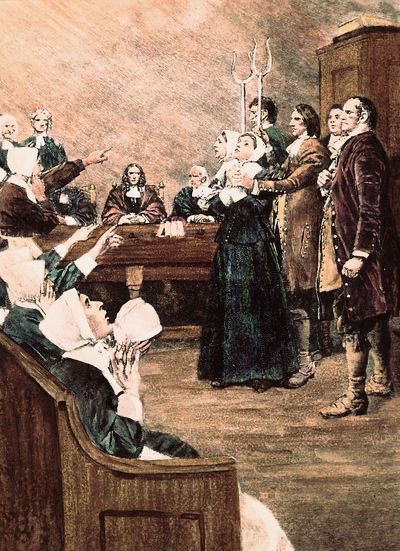

The Pendle witch trials of 1612 are widely recognized as one of the most significant witch trials in English history. These trials, which took place in Lancashire, specifically in the vicinity of Pendle Hill, are among the best-documented trials of the 17th century. The twelve individuals accused were believed to be responsible for the deaths of ten people through the practice of witchcraft. The majority of the accused, except for two, were tried at the Lancaster Assizes on August 18-19, 1612, alongside the Samlesbury witches and others. This series of trials has since become known as the Lancashire witch trials. One individual was tried separately at the York Assizes on July 27, 1612, while another died while in prison.
It is estimated that throughout the early 15th to early 18th centuries, fewer than 500 executions occurred as a result of English witch trials. However, the Pendle witch trials alone accounted for over two percent of that total.
Six of the accused witches belonged to two families, both led by elderly women. These families were Elizabeth Southerns (also known as Demdike), her daughter Elizabeth Device, and her grandchildren James and Alizon Device; as well as Anne Whittle (also known as Chattox) and her daughter Anne Redferne. The remaining accused individuals were Jane Bulcock and her son John Bulcock, Alice Nutter, Katherine Hewitt, Alice Grey, and Jennet Preston.
Many of the allegations stemmed from rivalries and accusations made between the Demdike and Chattox families.
The accused witches resided in the area surrounding Pendle Hill in Lancashire, a region that was considered wild and lawless by the authorities during the late 16th century. It was notorious for theft, violence, and lax morality.
Upon Queen Elizabeth’s death in 1603, James I succeeded her. Influenced by Scotland’s break from the Catholic Church during the Scottish Reformation, James developed a keen interest in Protestant theology, particularly in relation to witchcraft. By the early 1590s, he became convinced that he was being targeted by Scottish witches. After attending the trial of the North Berwick witches in 1590, who were accused of using witchcraft to conjure a storm against James and his wife, he wrote a book called Daemonologie in 1597. In this book, he instructed his followers to denounce and prosecute any supporters or practitioners of witchcraft. One year after ascending to the English throne, James enacted a law that imposed the death penalty in cases where magic had caused harm or corpses had been used for magical purposes. Despite his interest in witchcraft, James remained skeptical of the evidence presented in witch trials and often exposed discrepancies in testimonies against accused witches.
In early 1612, all the justices of the peace in Lancashire were ordered to compile a list of recusants, individuals who refused to attend the English Church and partake in communion, which was a criminal offense at the time. Roger Nowell, the justice of the peace for Pendle, conducted an investigation in March 1612 after receiving a complaint from the family of John Law, a peddler who claimed to have been harmed by witchcraft. Many of those implicated in the investigation considered themselves to be witches in the sense of being village healers who practiced magic, likely in exchange for payment. Such individuals were common in rural England during the 16th century and were generally accepted as part of village life.
One of the accused witches, Demdike, had been regarded as a witch in the area for fifty years, and some of the deaths attributed to the witches had occurred many years prior to Nowell’s investigation in 1612. The event that seemingly triggered Nowell’s investigation, leading to the Pendle witch trials, took place on March 21, 1612. Alizon Device, Demdike’s granddaughter, encountered a peddler named John Law on her way to Trawden Forest and asked him for some pins. Pins were often used for magical purposes, such as healing and divination, making them valuable. Law, however, hesitated to sell them to Alizon, which led to a disagreement. The details of the encounter remain unclear, with Alizon claiming she intended to buy the pins while Law’s son Abraham asserted that she was begging for them due to lack of money. According to the 1613 tract “Potts Discovery of Witches,” Alizon later claimed that a spirit familiar of her grandmother named Ball, who appeared as a black or brown dog with fiery eyes, had offered to harm Law. Shortly after the encounter, Law stumbled and fell, seemingly lame, but managed to reach a nearby inn. Initially, Law did not accuse Alizon, but she appeared to believe in her own powers. When Abraham took her to visit his father a few days later, she confessed and asked for forgiveness.
On March 30, 1612, Alizon Device, her mother Elizabewth, and her brother James were summoned to appear before Nowell. Alizon confessed to selling her soul to the Devil and admitted to instructing him to harm John Law after he insulted her. James revealed that his sister had also confessed to bewitching a child named John Robinson, who had fallen ill and died. Elizabeth, however, denied any involvement in witchcraft.
During the course of the investigation, several other individuals were accused of witchcraft, including Anne Whittle (Chattox) and her daughter Anne Redferne. Chattox was known for her reputation as a witch, and her daughter had been accused of unaliving a child through witchcraft. The accusations quickly spread, and more individuals were implicated, including Jane Bulcock and her son John, Alice Nutter, Katherine Hewitt, Alice Grey, and Jennet Preston.
The trials began on August 18, 1612, at the Lancaster Assizes. The accused witches were brought before the judges, Sir James Altham and Sir Edward Bromley, who presided over the proceedings. The evidence presented against the accused was largely based on testimonies from witnesses, many of whom were family members or neighbors.
Despite the lack of concrete evidence, the majority of the accused witches were found guilty and sentenced to death. On August 20, 1612, ten of the accused were executed by hanging at Gallows Hill in Lancaster. The two remaining accused, Alice Grey and Jennet Preston, were found not guilty and were released.
The Pendle witch trials had a lasting impact on the region and on the history of witchcraft in England. The trials highlighted the fear and paranoia surrounding witchcraft during the 17th century and the willingness of authorities to prosecute and execute those accused of practicing it. The trials also shed light on the social and economic tensions within the community, as rivalries and disputes played a significant role in the accusations.
In recent years, the Pendle witch trials have gained renewed interest and have become a popular tourist attraction. The area around Pendle Hill has embraced its dark history, with guided tours, museums, and events dedicated to the trials. The trials have also been the subject of books, documentaries, and plays, further cementing their place in English folklore and history.
Leave a Reply