Medieval history
-
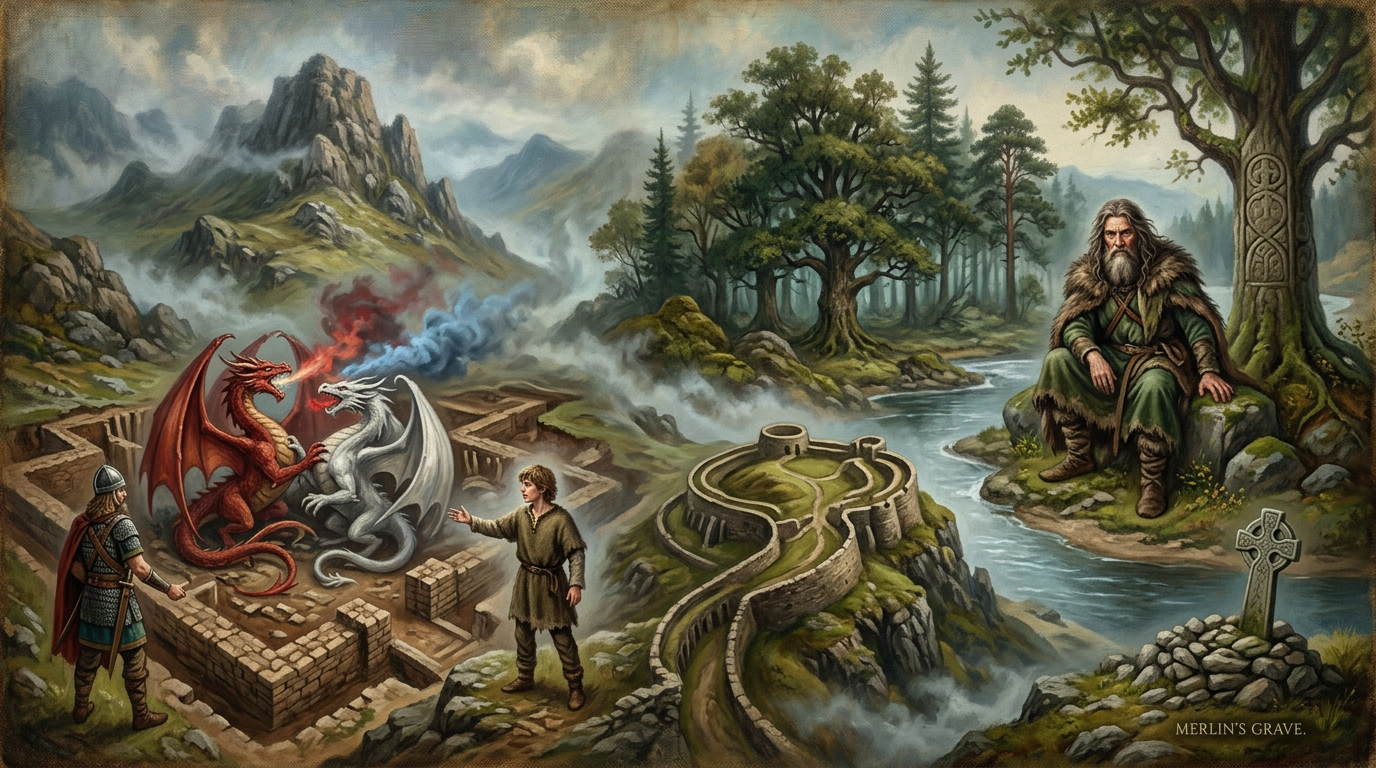
An archival study tracing the figure of Merlin from the sixth-century wild-man seers of the Welsh and Scottish North through Geoffrey of Monmouth’s twelfth-century literary construction to the enchanter of romance, examining the historical, folkloric, and anthropological layers that constitute one of Britain’s most enduring legendary figures.
-

An examination of Glastonbury as a layered palimpsest of belief, tracing its evolution from Iron Age marshland and pagan otherworld through the Arthurian grave, the Joseph of Arimathea tradition, and monastic ruin, to modern reenchantment—a study of humanity’s enduring compulsion to sanctify the landscape.
-

Ēostre, an Anglo-Saxon dawn goddess attested by Bede, gave her name to Easter. Linguistic ties connect her to a vast Indo-European dawn goddess family. Once debated, her existence is supported by Continental inscriptions. While linked to spring fertility, direct connections to hares are modern folklore. Her legacy is a powerful example of cultural syncretism.