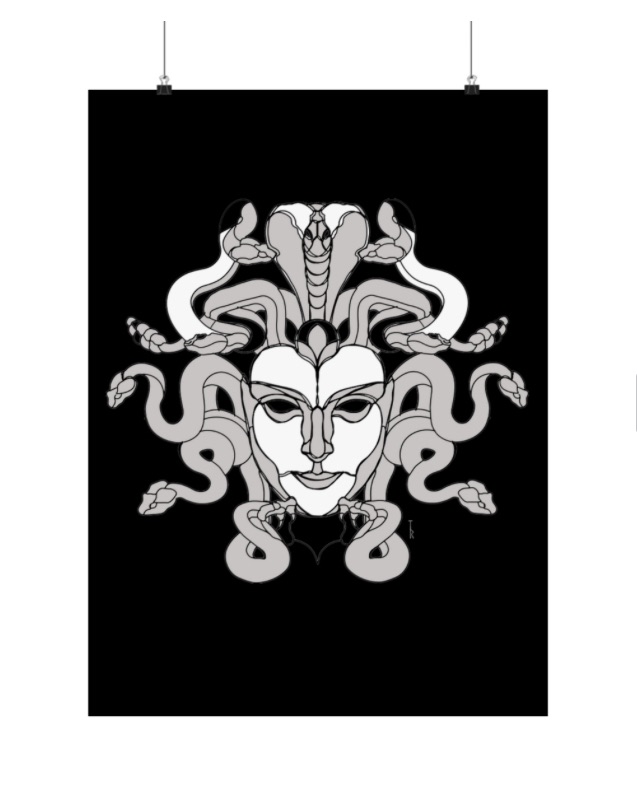

The story of Medusa, one of the most iconic figures in Greek mythology, has captivated audiences for centuries. From her birth as a Gorgon to her transformation into a monstrous figure, Medusa’s tale has been interpreted in various ways, reflecting the fears, desires, and societal dynamics of ancient Greece. This article will explore the creation and origin story of Medusa, revealing a complex and multifaceted character whose symbolism transcends time and culture.
According to Greek mythology, Medusa was one of the three Gorgon sisters, daughters of the sea deities Phorcys and Ceto. She was originally a beautiful maiden with long, flowing hair, but her fate took a dark turn when she caught the attention of the sea god Poseidon. In one version of the story, Medusa and Poseidon engaged in a passionate affair within the sacred temple of Athena. Enraged by this desecration, Athena transformed Medusa’s hair into a nest of venomous snakes and cursed her with a gaze that turned anyone who looked into her eyes to stone.
This transformation into a monstrous figure is often interpreted as a punishment for Medusa’s sexuality. In ancient Greek society, female sexuality was often seen as dangerous and uncontrollable, and Medusa’s fate serves as a cautionary tale against the consequences of defying societal norms. By turning Medusa into a terrifying creature, the myth reinforces the idea that women who embrace their sexuality are to be feared and ostracized.
However, there are alternative interpretations of Medusa’s story that challenge this traditional view. Some scholars argue that Medusa’s transformation can be seen as a symbol of empowerment rather than punishment. By becoming a Gorgon, Medusa gains a newfound power and agency. Her ability to turn people to stone with a single glance can be seen as a metaphor for the power of female sexuality and the fear it instills in a patriarchal society.
Furthermore, Medusa’s story also reflects the complexities of femininity. In some versions of the myth, Medusa is portrayed as a victim of circumstance, when Poseidon violates her in the temple of Athena. Medusa a priestess of Athens is then punished transforming her renowned beauty into a hideous creature. This interpretation highlights the vulnerability and powerlessness that women often face in a male-dominated world. On the other hand, Medusa’s monstrous form can also be seen as a manifestation of her inner rage and resentment towards a society that has oppressed and objectified her. In this sense, Medusa becomes a symbol of female rage and rebellion against societal expectations.
The enduring significance of Medusa as a symbol can be seen in its presence in various cultures and time periods. In ancient Greece, she represented the fears and anxieties surrounding female sexuality. In later periods, Medusa’s image was adopted by feminist movements as a symbol of female empowerment and resistance against patriarchal oppression. Today, Medusa continues to be a powerful and resonant figure, representing the complexities of femininity and the struggle for power and agency in an ever-changing world.
In conclusion, the creation and origin story of Medusa reveal a complex and multifaceted character whose symbolism transcends time and culture. From her birth as a Gorgon to her transformation into a monstrous figure, Medusa’s tale reflects the fears, desires, and societal dynamics of ancient Greece. By examining the different versions of her story and analyzing her role in Greek mythology, we gain insight into the enduring significance of Medusa as a symbol of power, fear, and the complexities of femininity. Medusa’s story serves as a reminder of the timeless themes and universal truths that mythology can convey, making her a figure that continues to captivate and inspire audiences to this day.