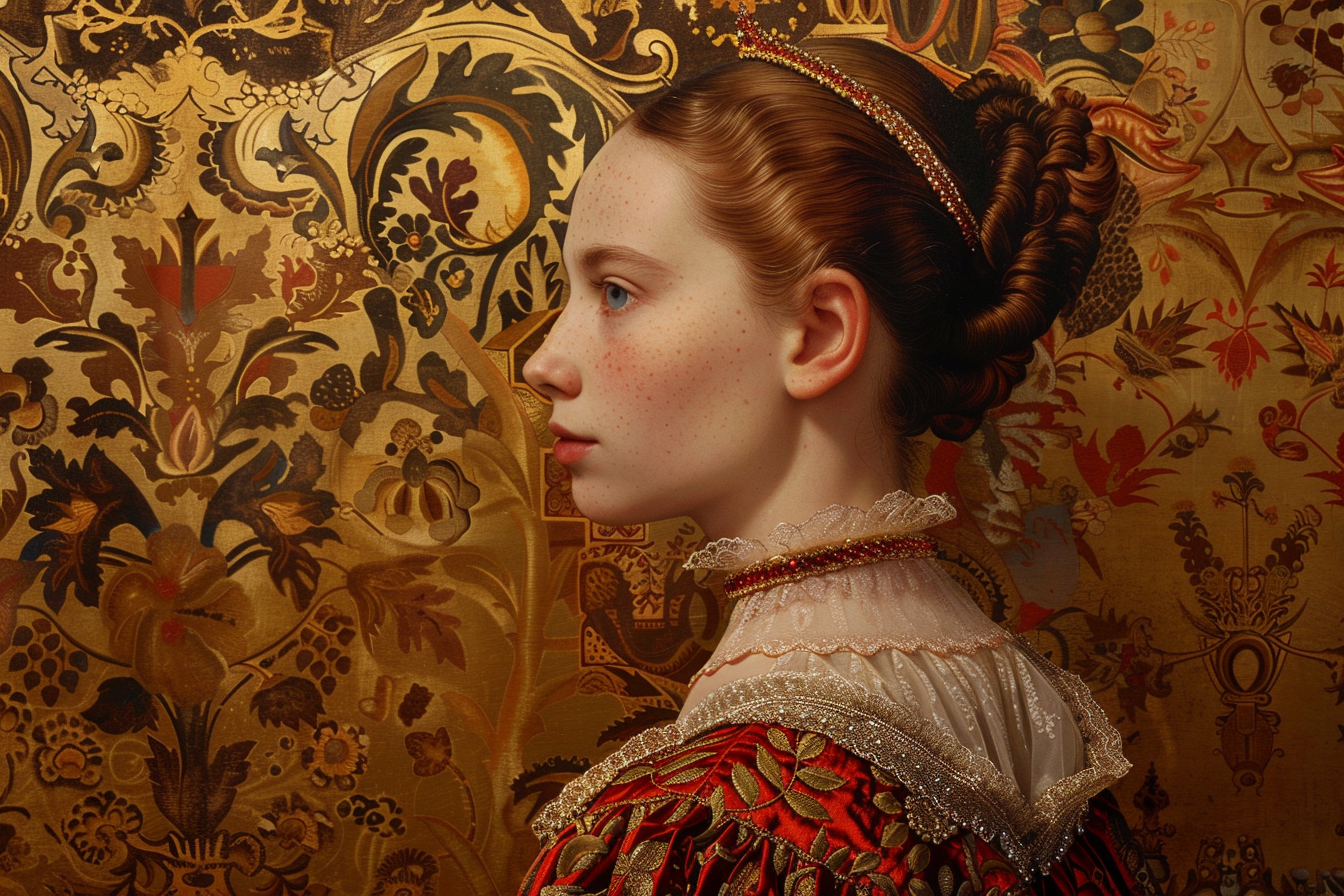

The Mysterious Demise of Isabella de Medici
Reading the details surrounding Isabella de Medici’s untimely demise, you can’t help but feel a sense of intrigue and mystery. There is a mystery surrounding her final moments that becomes an impenetrable veil. Whispers of foul play and insidious insinuations of power struggles and family secrets leave you grappling with questions that seem to have no answers. The labyrinthine web of intrigue and speculation invites you to delve deeper into the shadows, where the lines between truth and fiction blur, and reality takes on a haunting glow.
Isabella de Medici’s Impact on Renaissance Florence
Isabella de Medici was a member of the esteemed Medici family, known for supporting the arts and their influential position in Florentine politics. Originating from Florence, the family held great power as bankers, politicians, and rulers in Florence and other Italian cities during the 15th and 16th centuries. They expanded their influence through strategic marriages and alliances, and their wealth came from successful banking endeavors. This family played a vital role in shaping Italy and Europe’s political and cultural landscape.
Isabella lived during the Renaissance, a magnificent period of cultural and artistic brilliance marked by a resurgence of interest in the arts, sciences, and ancient knowledge from Greece and Rome. Florence, in particular, became a focal point for artistic and intellectual growth, attracting renowned artists, scholars, and philosophers. The socio-political climate of the time was characterized by a delicate balance of power among various city-states in Italy, including Florence, where Machiavellian principles of power, diplomacy, and statecraft were prevalent.
Isabella’s family supported artists like Michelangelo, Leonardo da Vinci, and Botticelli, transforming Florence into a hub of creativity and innovation. However, political rivalries and power struggles also added complexity to the Medici’s position and the overall political climate of the time. Things worsened after her mother’s passing from malaria. Yet Isabella stepped in and became the primary female figure in the Medici family, holding the title of First Lady of Florence. Other European courts acknowledged her role during official events.
The Star of Florence
Isabella de’ Medici’s legacy embodies the emergence of modernity during the Renaissance in Italy. She was recognized as an exceptional figure among the Medici women, possessing a unique combination of qualities that shaped Florence’s cultural landscape. Like a Grand Duchess in all but name, Isabella personified beauty, culture, and intellect. She established an artistic circle, including writers, poets, painters, and musicians, advocating for female artists. Her dynamic spirit and cultural influence revitalized the Medici court, propelling its second Renaissance and transforming it into a bustling center of musical and literary innovation. Isabella also spearheaded initiatives to establish vernacular Tuscan as Italy’s official language.
Rejecting the conventional notion of being defined solely as her husband’s possession, Isabella championed autonomy and personal freedom. She maintained a distinct residence under her own name. She continued to use her maiden name after marriage, defying societal norms that considered women the property of their husbands and asserting her autonomy and individuality. By reportedly engaging in a twelve-year-long romantic relationship with her husband’s cousin, Troilo Orsini, Isabella sought parity with men who enjoyed unrestrained liberties at the time. Despite having such freedoms, on July 16, 1576, at the age of 34, she would pass away. Some say by accident, and others say by the hands of her husband, but before we delve further into the matter, let’s learn more about the woman once referred to as “the Star of Florence.”
Renaissance Royalty and Symbol of Independence
Isabella Romola de’ Medici (August 31, 1542 – July 16, 1576) was the third child and second daughter of Cosimo I, Duke of Tuscany, and Eleonora Alvarez of Toledo. Alongside her brothers and sisters, she lived first in the Palazzo Vecchio and later in the Palazzo Pitti, spending much of her childhood at her father’s ancestral country home, Villa di Castello. The Medici children were educated at home by tutors in subjects such as classics, languages, and arts, overseen by Cosimo’s mother, Maria Salviati, until her death. From age five, as a young Medici princess, she studied Latin and Greek under the tutelage of Antonio Angeli da Barga and Piero Vettori.
From an early age, Isabella showed a great love for music, which, in her adulthood, she used as a means of self-expression, according to biographer Caroline Murphy. Her music instructor, Mattia Rampollini, known as Squitti, was her mentor from 1551 to 1554. Mariotto Cecchi commended her as “learned” at just nine years old, and her tutor, Pier Francesco Riccio, received a letter proudly stating, “She makes Latin verses that are lengthier than a bible.”
Educated in the classics, she was also fluent in five languages, namely Spanish, French, Latin, and Greek, in addition to her native Tuscan. A great beauty, she had a lively, high-spirited, and vivacious character that courtiers commented on.
From a young age, Isabella was also noted for participating in traditionally male-dominated sports, such as hunting, where her equestrian skills are said to have surpassed many men in her entourage.
At the tender age of 11, Isabella de Medici was married off to Paolo Giordano Orsini, a man of wealth with a noble lineage that dated back to the Romans. This union secured Tuscany’s southern borders, where the Orsini family owned land, strengthening the longstanding connection between the Medici and Orsini families. This connection could be traced back to the marriage of Lorenzo de’ Medici to Clarice Orsini and their son Piero’s union with Alfonsina Orsini. The marriage contract, signed in Rome by Cardinal Guido Ascanio Sforza of Santa Fiora, acting as Paolo Giordano’s guardian, and Averardo Serristori, ambassador and prosecutor for Cosimo I, was dated July 11, 1553.
The religious ceremony occurred privately three years later in Florence on January 28, 1556, just before Paolo Giordano’s departure to join Pope Paul IV’s war against the Spanish. Historical records reveal that the marriage was consummated in the villa of Poggio a Caiano on September 3, 1558, following the war’s end. Paolo departed the following day. In celebration of the couple, Francesco Corteccia, the court musician, composed a Latin motet. At the same time, the Flemish composer Philippus de Monte penned a madrigal in which Isabella was hailed as wiser and more beautiful than the goddess Flora. Unfortunately, their marriage was far from happy. It quickly became apparent to Isabella that Paolo was not the loving, affectionate man that her father had been. Instead, he was crude, overweight, and behaved in a manner unbecoming of a nobleman.
Paolo was unfaithful and abusive, preferring to spend his time in Rome with prostitutes rather than with his wife. Disheartened and disillusioned, Isabella returned to Florence, seeking solace in her father’s palace. There, she found freedom and independence, as if she had never been married. It was a joyous revelation for her to be able to live life on her own terms, pursuing her own happiness.
Previously, Paolo Giordano attempted to establish his residence in the Castle of Bracciano after the founding of the Duchy of Bracciano by Pope Pius IV at the behest of Cosimo I (as a gift to his son-in-law). However, the couple’s official residence remained the ancestral Palazzo Medici on Via Larga, by Cosimo I’s wishes. Concerned by his new son-in-law’s spending habits and indebtedness, Cosimo decided to keep his daughter and her 50,000 scudi dowry in Florence, giving her greater freedom and control over her affairs than was customary for Florentine women.
In 1565, Isabella received the Villa Baroncelli, later known as Poggio Imperiale, as a gift from her father, Cosimo I. Isabella commissioned sculptures from Vincenzo de’ Rossiand Vincenzo Danti to furnish the residence. Having a residence in her own name and independently from her husband granted her freedom rarely seen for a woman of her time.
Following the deaths of her two sisters, Maria (1559) and Lucrezia (1561), and, most significantly, the passing of her mother, Eleonora, in 1562, Isabella became the sole woman in Cosimo I’s family. As she had not yet borne children, her brother Francesco entrusted her with the responsibility of caring for their younger brothers, Pietro and Ferdinando, and, above all, their ailing father, whose health deteriorated as a result of the family’s tragic losses. Thus, Isabella became the emotional mainstay of her family.
During Cosimo I’s lifetime, Isabella was the preeminent female figure within the Medici family, a role acknowledged by other European courts during formal events.
Before Joanna of Austria‘s arrival in Tuscany as the wife of Francesco de’ Medici, she and Isabella maintained a warm correspondence. Their bond was further solidified when Isabella, in December 1565, extended hospitality to Joanna in Poggio a Caiano, in line with the welcome her mother, Duchess Eleonora, would have offered. Accounts by Mellini vividly depict Isabella’s role in orchestrating Joanna’s grand entrance into Florence, where she was greeted with the esteemed company of fifty Florentine noblewomen at Isabella’s court.
Even after Francesco de Medici’s marriage, Isabella continued to overshadow the sovereign and was considered ‘the real grand duchess’ by many. Stefano Rossetti, a madrigalist, composed a song in her honor, published alongside ‘The Lament of Olympia’ (Venice, 1567), in which she was celebrated as “worthy of a royal crown and empire.”
In 1570, when Cosimo I entered Rome to receive the title of Grand Duke of Tuscany from Pope Pius V, the protocol of the pontifical master of ceremonies reserved for Isabella the honor of the solemn entry immediately after her father, just as it had for her mother a decade earlier.
Isabella’s esteemed position and diplomatic prowess allowed her to participate in the intricate network of relationships among the wives of princes, involving continuous exchanges of favors and secret alliances that operated outside official channels. Isabella’s direct correspondence with foreign monarchs, including Catherine de’ Medici and Elisabeth of Austria, both queens of France, King Henry III, Catherine of Austria, queen of Poland, as well as notable figures like John of Austria and Margherita of Savoy, underscores her esteemed position within the European political network of her time.
Her political abilities challenged Pope Pius V’s intransigence and the Inquisition’s strictures. Beginning in 1569, Isabella’s Florentine household provided a safe haven for Paolo Ghislieri, the pope’s nephew, who had been deposed from his position as the governor of Borgo, stripped of his possessions, and exiled due to his extravagant lifestyle. Additionally, Fausto Sozzini, an anti-Trinitarian theologian, served the dukes of Bracciano between 1569 and 1573 and found refuge within Isabella’s household.
The Alleged Affair of Isabella de’ Medici and Troilo Orsini
Upon realizing that Isabella did not miss him in the slightest, Paolo became paranoid and fearful of being humiliated if his wife took a lover. In response, he ordered his cousin, Troilo Orsini, to keep a watchful eye on her.
Isabella’s free-spirited personality led to speculation about her relationship with Troilo, sparking widespread rumors. These rumors, supported by subsequent studies, suggested that Isabella and Troilo were romantically involved. Historians generally believe that between 1564 and 1566, they engaged in a secret love affair that lasted until Troilo was banished from Florence in 1575. However, the presence of letters addressed jointly to Isabella and Troilo suggests that their relationship may not have been as secretive as believed, indicating a more overt connection between them.
Although no explicit love letters between Isabella and Troilo have been found, historians who support the theory of their romantic involvement refer to a series of letters exchanged between Troilo and an unidentified woman. These letters validate the existence of an extramarital affair between Troilo and a married woman from a prestigious Florentine lineage who professed her love for him passionately (“From the first day that I spoke to him I was so excited about him that I have never lived quietly, and your lordship be sure that I love him and adore him as much as possible”).
Scholars present convincing evidence linking these letters to a married woman of high status in the Medici court, likely Isabella, as her sisters had already passed away. It suggests that considering the dangers involved, Isabella would have taken extraordinary precautions to conceal her identity, such as refraining from signing her name or using her handwriting. However, it is still uncertain whether this mysterious woman was indeed Isabella.
Historians also document an incident from December 1574, as recounted by Giuliano de’ Ricci, in which Troilo fatally wounded Torello de Nobili da Fermo, a member of Pietro de’ Medici’s inner circle, “because of the Lady Isabella de’ Medici, with whom both men were in love.”
Troilo, who never married, also faced rumors regarding the paternity of Isabella’s children. The circumstances and timing of their births, along with Isabella’s numerous miscarriages, led to speculation. Dispatches from Ferrarese ambassador Ercole Cortile even alleged the birth of a third child to Isabella in May 1576 in the Medici villa of Caffagiolo, whose father could not have been her husband due to his prolonged absence. While these claims remain unproven, Paolo Giordano had expressed intentions to disinherit Virginio and Eleonora Orsini after Isabella’s death, claiming that they were not his children.
“Wit, beauty, and talent made her conspicuous among all the day’s women, and she captivated every heart except her husband’s. Speaking Spanish, French, and Latin fluently, a perfect musician, singing beautifully, a poetess and improvvisatrice by nature, Isabella was the soul of all around her and the fairest star of the Medici.”
“Wit, beauty, and talent made her conspicuous among all the day’s women, and she captivated every heart except her husband’s. Speaking Spanish, French, and Latin fluently, a perfect musician, singing beautifully, a poetess and improvvisatrice by nature, Isabella was the soul of all around her and the fairest star of the Medici.”
Patroness of Arts, Music, and Literature
During the 1560s and 1570s, Isabella became the center of intellectual communities in Siena and Florence. Writers, musicians, and poets dedicated their works to her, honoring her exceptional qualities. Beltramo Poggi, for example, chose Isabella as the inspiration for his work ‘La invention della Croce di Giesù Christo’ (Florence 1561), acknowledging her as one of the most illustrious and exceptional women in the world, both in status and in devotion to spirituality.
She was often compared to the learned princess and scholar Saint Catherine of Alexandria and even likened to the goddess Minerva. One of the most famous depictions of her was in Giovanni Maria Butteri’s altarpiece, which she commissioned. In the bottom left corner, this altarpiece, titled ‘Virgin and Child and Members of the Medici Family as Saints’, prominently featured Isabella as Saint Catherine.
Another masterpiece is Bronzino’s Portrait of Isabella de Medici, a renowned commissioned work that perfectly captures her elegance and poise. Painted by the esteemed artist Agnolo Bronzino, this portrait immortalizes Isabella’s noble stature and unwavering support for the visual arts.

It is to be noted that Isabella’s influence extended beyond portraiture. She was pivotal in creating the Grotto in the Boboli Gardens, a magnificent underground chamber adorned with precious gems, shells, and pebbles. This fusion of natural elements and artistic skill resulted in a breathtaking space of serene beauty, which became Isabella’s cherished retreat and a testament to her dedication to creating unique cultural spaces.
Moreover, Isabella’s influence as a patron of the arts extended beyond visual arts and into music and theater. She was pivotal in developing and organizing extravagant intermedi, which were elaborate musical and theatrical interludes performed during courtly festivities. These spectacles served as a platform to showcase the immense talents of musicians, singers, and dancers, exemplifying Isabella’s unwavering dedication to nurturing a vibrant and flourishing cultural scene within the Medici court. Music held a special place in Isabella’s heart, as it allowed her to express herself in a way that resonated deeply. In fact, she was known to have composed music herself, with contemporaries admiring the beauty of her compositions. Although only one of her works has survived, a lute composition titled “Lieta vivo e contenta” is a testament to Isabella’s musical prowess. Preserved in the Estense University Library in Modena, the composition can be found in Cosimo Bottegari’s book of songs and lute, serving as a lasting testament to Isabella’s contribution to the world of music.
Isabella, as a patron, supported the professional career of Maddalena Mezari, known as Casulana, a famous madrigalist who dedicated her compositions to her (‘Il libro primo de ‘madrigali a quattro voci’, Venice 1568).
A keen linguist and passionate about the correct use of Tuscan, Isabella’s cultural significance extends to her pivotal role in the emergence of the unified Italian language, evidenced by her regular hosting of scholarly debates preceding the establishment of the Accademia della Crusca. The ‘questione della lingua,’ a widespread discussion reverberating across the Italian peninsula regarding the standards for codifying Italian, held profound significance for Cosimo’s ambition to position Florence as the preeminent cultural center of Italy. Florence, boasting its association with literary giants like Dante, Boccaccio, and Petrarch—all originating from Tuscany—naturally became the epicenter of this discourse. In 1550, Cosimo’s commissioning of a new grammar for the Tuscan vernacular propelled the ‘questione della lingua’ to the forefront of the cultural agenda for the new Medici generation. Isabella’s notable contribution to this dialogue and her scholarly stature in this endeavor were recorded in 1573 by Giovanni Battista Strozzi. He references Isabella’s arbitration document advocating for the definitive use of ‘mai’ (never), citing Boccaccio’s Decameron as her authoritative source.
In Sozzini’s collection of ‘Rime,’ there is a sonnet in the form of an acrostic dedicated to Isabella, praising her as a vessel for the light of God, a theme reminiscent of Dante and Petrarch. Stefano Rossetti, a renowned madrigalist, composed a song in her honor, which was published alongside ‘The Lament of Olympia’ (Venice, 1567), where she was celebrated as deserving of a royal crown and empire.
Girolamo Bargagli, a prominent member of the Accademia degli Intronati, dedicated his work ‘Dialogue of the games that are used to be played in the Sienese old age’ (Siena 1572) to Isabella. Mario Mattesillani also dedicated a work to her titled ‘The happiness of the most serene Cosimo de’ Medici, Grand Duke of Tuscany’ (Florence 1572). Even her mathematics teacher, the cosmographer Egnazio Danti, presented her with the text for his course held at the Florentine Studio (‘La sphere of Proclus Liceo…’ Florence 1573), showcasing her influence and admiration in various fields.
Isabella’s patronage extended beyond visual arts and music to include writers and poets. She supported and encouraged poets, allowing them to flourish in their craft. Her court became a hub of literary activity, with poets like Torquato Tasso and Francesco Maria Molza finding inspiration and recognition under her patronage. Isabella’s support allowed these writers to share their works and contribute to the rich tapestry of Italian literature.
Through her patronage, Isabella de Medici not only nurtured the talents of artists, musicians, and writers but also contributed to the cultural legacy of the Medici family. Her support helped shape the time’s artistic, musical, and literary movements, leaving an indelible mark on the Renaissance era.
Additionally, Isabella’s devotion to preserving the Medici family’s legacy and her passion for art and religion converged in constructing the impressive Medici Chapels in Florence. These chapels, located in the Basilica of San Lorenzo, served as the final resting place for the Medici family. Isabella’s involvement in this project highlighted her commitment to creating a harmonious space that seamlessly blended artistic and religious elements.
In time, her court became a gathering place for intellectuals, fostering scholarly discussions and the exchange of ideas. These elements contributed to the flourishing of Italian literature during the Renaissance period.
It seemed all the world loved Isabella. All but her husband. After enduring the trials and tribulations of a troubled marriage for nearly two decades, Isabella resided primarily in Florence. Her husband, Paolo Giordano Orsini, had become entangled in an illicit affair with the married Vittoria Accoramboni in Rome. Corrupted by his own power and under the influence of his lover, Orsini hatched a malevolent scheme to rid himself of his wife and Vittoria’s husband, Francesco Peretti, to marry Vittoria.
Recognizing the danger, Isabella sought refuge with Catherine de Medici in France. Catherine agreed to help, but unfortunately, time was not on their side. On July 16, 1576, Isabella reluctantly accompanied her husband to their villa in Cerreto Guidi, near Empoli, at his request. Along the way, she confided in her companion, Lucrezia Frescobaldi, expressing her apprehension.
The Sinister Demise of Isabella de’ Medici
According to historical records, Orsini had meticulously orchestrated the scene for the heinous events that would transpire. A hole had been discreetly cut into the ceiling above their bedroom, with four men strategically positioned. A noose was carefully threaded through the hole, concealed behind a curtain near the window. That fateful night, as Orsini and Isabella entered the dimly lit room, he deceitfully placed the noose around her neck while pretending to share a kiss. In a brutal struggle, Isabella was tragically strangled to death. Orsini later claimed that she had succumbed to apoplexy while “bathing her head.” He then dispatched his soldiers to the Villa Negroni in Rome, where they mercilessly murdered Francesco Peretti.
The Tragic Legacy of Isabella de’ Medici and Vittoria Accoramboni
Pope Gregory XIII, sensing foul play, adamantly refused permission for Orsini to wed the widowed Accoramboni. Defying the pope’s decree, the couple staged a mock marriage, sparking a prolonged four-year clash with the papacy. However, with the passing of Pope Gregory, his uncle, Sixtus V, ascended to the papal throne. As a relative of the slain Francesco Peretti, Sixtus was resolute in his quest for justice. Accoramboni sought sanctuary in Padua, fearing retribution, while Orsini was banished to Venice. Eventually, Orsini met his demise in Venice, leaving his estate to Vittoria.
Enraged by this turn of events, Ludovico Orsini, Paolo’s closest relative, sought revenge and ruthlessly murdered Vittoria in retaliation. Ludovico was subsequently apprehended, tried, and executed, marking the tragic downfall of the Orsini family, which never managed to regain its former glory and influence.
While Isabella’s life was tragically cut short, her contributions and influence live on through the rich artistic and cultural legacy she helped cultivate. The power of her patronage, the intellectual discussions she promoted, and the political alliances she forged all contributed to the vibrant and enduring legacy of Renaissance Italy. Isabella de Medici’s contributions and tragic demise serve as a reminder of both the immense cultural and artistic achievements of the era and the darker aspects of Renaissance society.
And so, the enigmatic tale of Isabella de’ Medici, Paolo Giordano Orsini, Vittoria Accoramboni, and Francesco Peretti reaches its haunting conclusion. The truth surrounding Isabella’s death remains obscured, lost in a web of speculation and conflicting accounts. Was it a calculated act of violence orchestrated by her husband and brother, or did she succumb to an illness, with rumors of foul play fabricated to tarnish the Medici name?
The Ghostly Legacy of Isabella de’ Medici
Her ghostly presence captivates the imagination as we grapple with the uncertainty surrounding Isabella’s fate. Sightings of her ethereal form wandering the grounds of the villa serve as reminders of the enduring power of her story. Whether seeking justice or reclaiming her place in history, Isabella’s spirit refuses to be forgotten, leaving an indelible mark on those who encounter her ghostly apparition.
Yet, while the legend of Isabella de’ Medici lives on, we must acknowledge that the truth may forever elude us. As time passes and the villa falls into disrepair, the enigma surrounding Isabella’s death may fade into the whispers of history. But the resilience and strength of women like Isabella endure, reminding us that their voices cannot be silenced, even in death.
So let us continue to reflect upon this tale, to question and seek understanding, ensuring that the stories of those who have been obscured by time are not forgotten. In our pursuit of truth and enlightenment, we honor Isabella’s memory and the countless others who have faced similar challenges and hardships throughout history.
May Isabella’s ghostly presence is a reminder of her story’s enduring power and the importance of seeking truth, justice, and empowerment for all. May we carry her legacy forward, ensuring that the voices of women who have been silenced or forgotten find their rightful place in the annals of history.
The Resilient Flame
And so, my dear friends, I bid you farewell from the realm of the living. But fear not, for my spirit remains resilient even in death, determined to reclaim my rightful place in history. The truth of my life, my loves, and my tragic demise shall not be buried with me. I fervently hope that my story will serve as a testament to the strength and resilience of women throughout the ages.
Let it be known that I, Isabella de’ Medici, the Star of Florence, defied societal norms and expectations. I embraced my independence, my passions, and my pursuit of happiness. Though my marriage was marred by infidelity and abuse, I refused to be silenced or diminished. Instead, I sought solace in the arms of another, defying the very man who sought to control and destroy me.
While my life was cut short by the treacherous hands of my own husband, I refuse to be forgotten. My spirit lingers in the halls of the Medici hunting lodge, a reminder that justice and vindication await even in death. The whispers of the villagers, calling me the White Lady, echo through time, keeping my memory alive.
May my story inspire generations to come, reminding them that no matter the challenges we face, our true beauty lies in our resilience, passion, and refusal to be silenced. Let the world remember Isabella de’ Medici, a woman who defied expectations, challenged the status quo, and left an indelible mark on the annals of history.
Farewell, my dear friends. Carry my story with you, and may it ignite the flame of rebellion and empowerment within your hearts. Ultimately, our unwavering spirit will light the way to a future where women are celebrated and their voices heard.

2. “The Medici Women: Gender and Power in Renaissance Florence” by Natalie R. Tomas
4. “The Medici: Power, Money, and Ambition in the Italian Renaissance” by Paul Strathern
Leave a Reply